
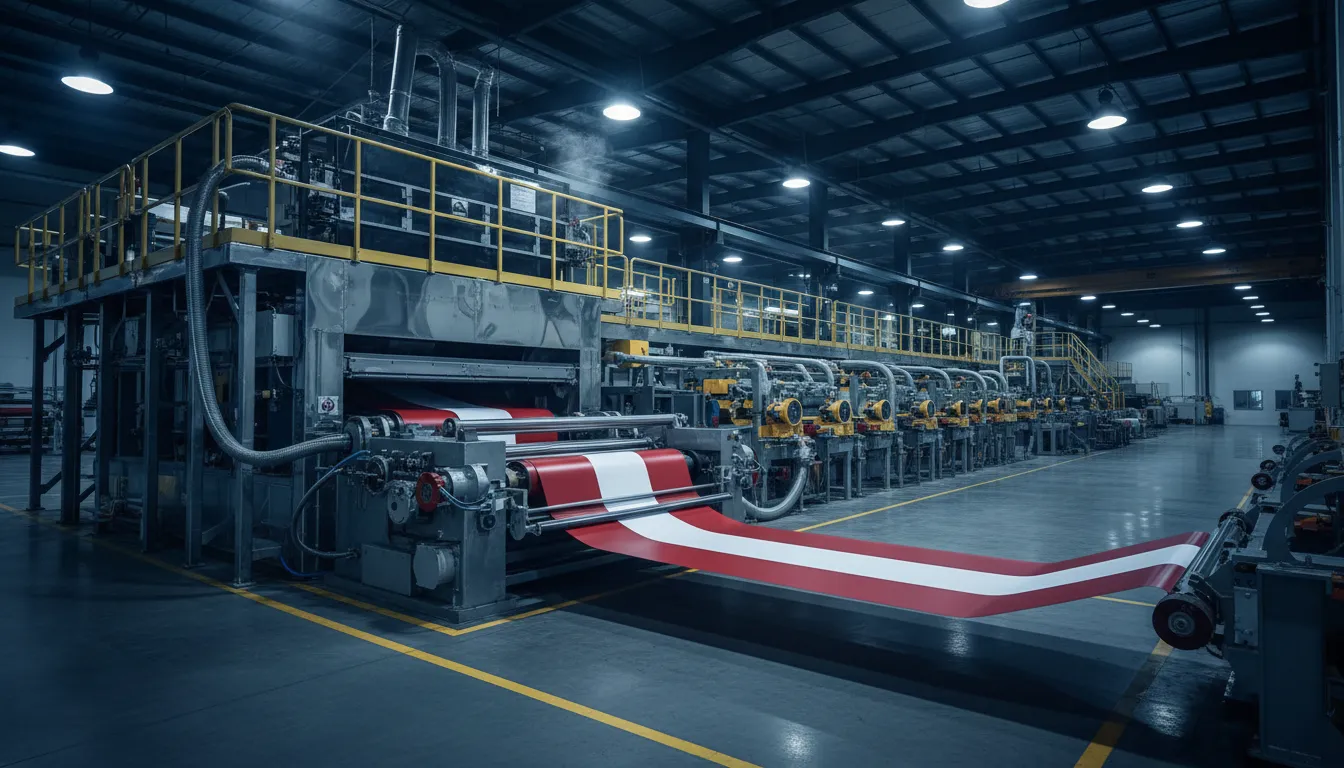
Coating systems, matched to the environment
Seven coating systems for aluminum and steel coil: PE, HDPE, PVDF, PUPA, epoxy, acrylic, and epoxy-PE. Any color in any system.
Coating Systems
Find the right system.
Choose an environment or a coating to see where it fits, its qualitative performance profile and typical applications. Exact performance and warranty are confirmed per specification.
Where will it live?
Performance profile
Typical applications
Indicative positioning shown qualitatively, not test data. Exact performance and warranty are confirmed per specification and exposure.
The systems.
PVDF (fluoropolymer, 70:30)
The premium architectural coating, typically a 70:30 blend of PVDF resin and acrylic. Its performance comes from the carbon-fluorine bond, one of the strongest in organic chemistry, which resists the UV energy that breaks down other coatings. The result is exceptional color and gloss retention with minimal chalking over decades. Best for facades, cladding, architectural roofing and coastal exposure. Typical industry exterior life is often cited at 20 to 30 years. Orbit warranty 5 to 20 years by application and environment.
PUPA (polyurethane-polyamide)
A polyurethane base with a polyamide component for a tough, abrasion- and mar-resistant film with good flexibility. Suited to high-wear uses such as rolling shutters, and the base for several functional variants. PUPA is the coating in our confirmed ~75% recycled-content example on 3105 substrate.
Polyurethane (PU)
Good flexibility and abrasion resistance, used where mechanical toughness and moderate exterior performance are needed.
HDPE (high-durable polyester)
A modified, higher-performance polyester engineered for better UV and weather resistance than standard PE, at a moderate cost premium. A strong general-purpose exterior choice for roofing and gutters where PVDF-grade longevity is not required. Typical industry exterior life is around 10 to 15 years.
PE (polyester)
The most widely used coil coating: economical, available in a broad color range, with good formability. Standard PE suits interior use and light exterior service where UV exposure is limited; it will chalk and fade faster outdoors than fluoropolymer systems. Typical industry exterior life is around 5 to 10 years.
Epoxy and Epoxy-PE
Epoxy coatings provide outstanding adhesion and corrosion resistance but poor UV stability, so they are used primarily as primers and for interior or back-coat applications. Epoxy-PE pairs epoxy's adhesion with a polyester topcoat.
Acrylic
An economical coating for interior and low-UV applications.
Selection
Coating by environment.
Coating choice is driven mainly by exposure. Color, gloss, formability, and budget also apply.
| Environment | Typical choice | Why |
|---|---|---|
| Coastal / marine / high-UV | PVDF | Maximum UV and salt resistance, minimal chalking |
| General exterior (inland) | HDPE | Strong weathering at moderate cost |
| High-wear / cycling (e.g. shutters) | PUPA | Abrasion and mar resistance with flexibility |
| Interior / sheltered | PE or acrylic | Economical where UV exposure is limited |
| Corrosion-critical substrate | Epoxy primer system | Superior adhesion and corrosion protection |
Orbit recommends a system for your application and confirms warranty for your specific spec, start with an RFQ.
Color, finish & sides
All systems are available in any RAL or custom color and a range of finishes: see prepainted aluminum coil. Coil is coated one-side or two-side with primer, with protective film available.
How we verify coating quality
Coated coil is checked against a full panel of tests: salt spray, UV, T-bend, adhesion and more. See quality & certifications.
Warranty
Warranty runs 5–20 years depending on the application and the installation environment (coastal vs inland). We confirm the warranty for your specific spec at quote stage. See the buyer FAQ.
Specialty & functional
Beyond color, functional coatings add performance such as easy-clean, antibacterial or heat-reflective surfaces. See functional coatings.
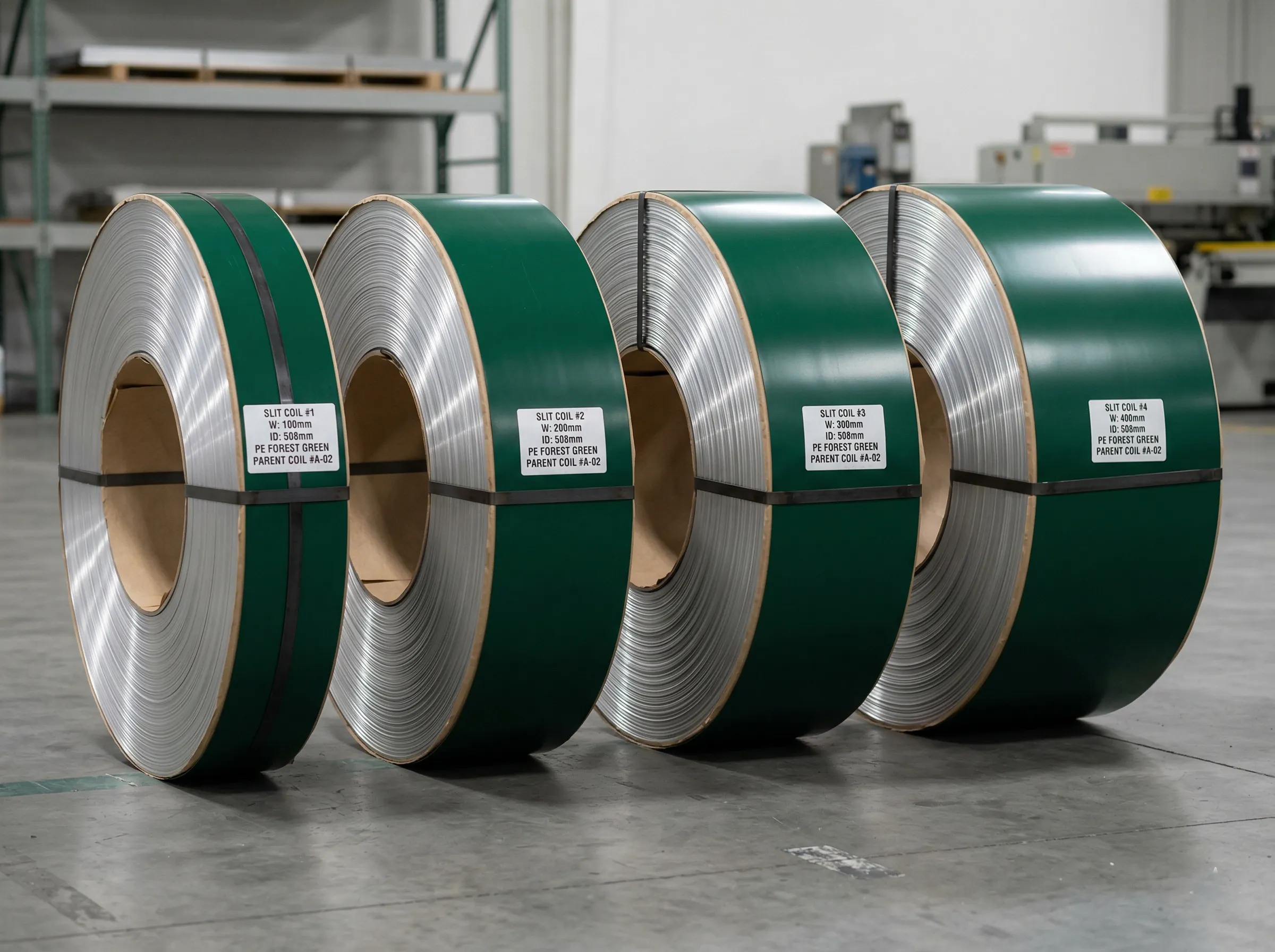
What the coating tests actually measure
The properties that matter when evaluating coated coil, and the tests that quantify them. Detailed quality documentation is with quality and certifications.
| Salt spray (corrosion resistance) | Exposes the coating to a salt fog to assess how well it protects the substrate from corrosion; critical for coastal and exterior use. |
|---|---|
| UV / accelerated weathering | Simulates years of sun exposure to predict color and gloss retention and chalking resistance. |
| T-bend (flexibility) | Bends the coated strip back on itself to check that the coating flexes without cracking or losing adhesion; essential for coil that will be formed. |
| Impact resistance | Strikes the coating to confirm it stays adhered under sudden deformation. |
| Adhesion | Typically a cross-hatch test confirming the coating bonds to the substrate. |
| Gloss retention | Measures how well the surface keeps its specified gloss over time. |
| Abrasion resistance | Assesses wear resistance, important for handled or cycled surfaces. |
| MEK rub (cure / solvent resistance) | Rubs the surface with solvent to confirm the coating is fully cured and chemically resistant. |
| Pencil hardness | Rates surface hardness against graded pencil leads. |
| Color difference (delta E) | Quantifies how closely the color matches the target, batch to batch. |
| Paint (dry film) thickness | Confirms the coating is applied to the specified build. |
Coating questions.
What's the difference between PVDF and PE coating?
PVDF is a premium fluoropolymer with superior UV and weather resistance for demanding exteriors; PE (polyester) is an economical system best for sheltered or interior use.
Which coating is best for coastal environments?
PVDF is typically specified for coastal and high-UV exposure because it resists chalking and color loss.
Can I get any color in any coating system?
Yes, any RAL or custom color is available across the coating systems.
What warranty does coated coil carry?
Coated coil carries a warranty of 5 to 20 years depending on the application and environment, confirmed per specification.
Does Orbit coat both sides?
Yes. Coil can be coated one-side, or two-side with primer.
Not sure which system you need?
Tell us the application and environment, we will recommend the coating. Include your application, substrate (aluminum or steel), alloy, gauge, width, coating, color, quantity and destination. We respond to RFQs within one business day.