
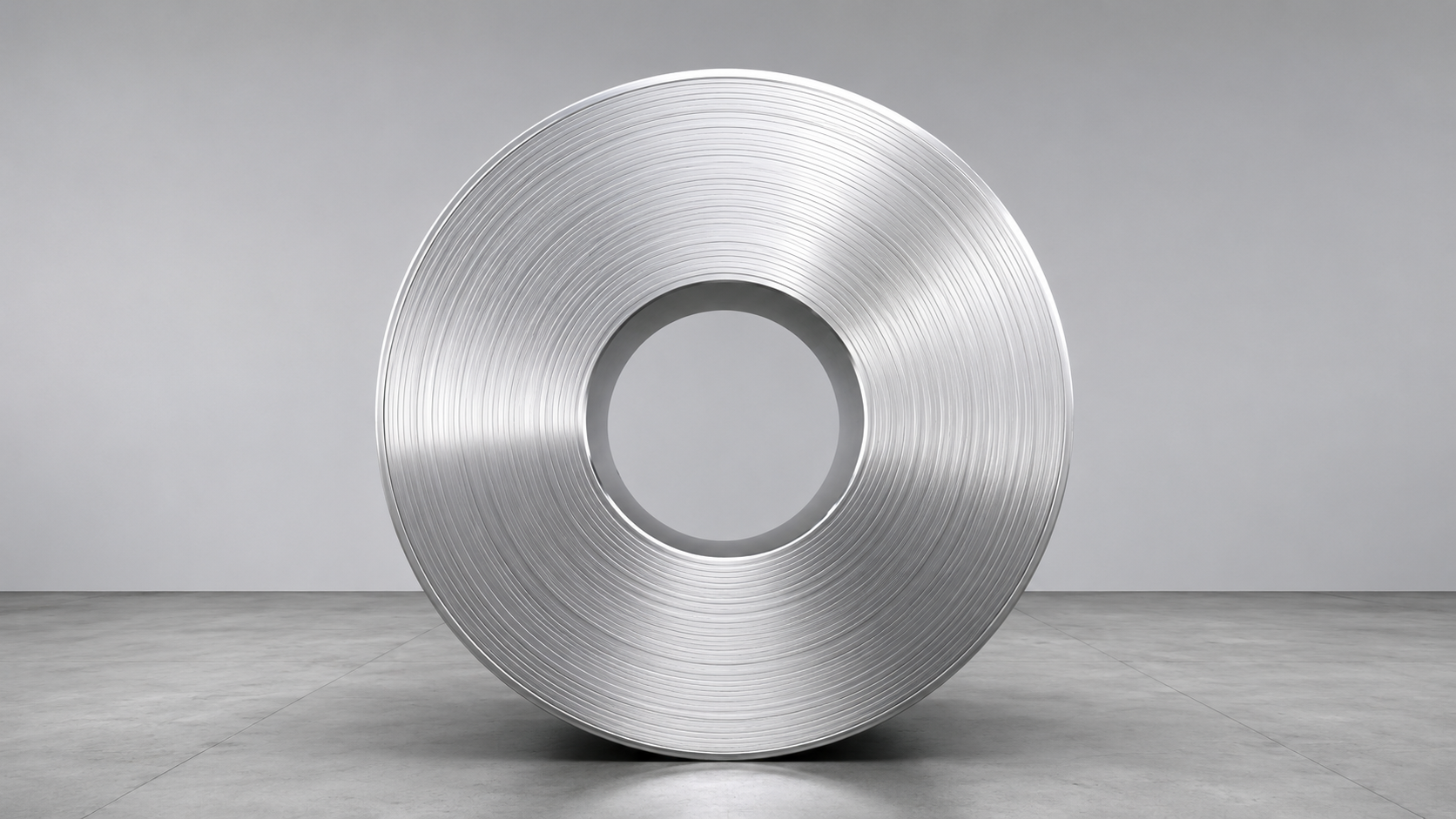
Rolled aluminum coil — 1xxx, 3xxx, 5xxx alloys, 0.20 to 2.00 mm.
Mill-finish aluminum coil and coil stock in 1xxx, 3xxx, and 5xxx alloys, 0.20 to 2.00 mm thick and up to 1650 mm wide, coils up to 10 tons.
Product
Rolling capability.
Coil stock is the semi-finished starting point for roofing, shutters, panels, gutters, and signage. Alloy and temper determine formability, strength, and corrosion behavior.
| Alloy series | 1xxx, 3xxx, 5xxx |
|---|---|
| Thickness | 0.20 – 2.00 mm |
| Maximum width | 1650 mm |
| Finishes | Mill finish, stucco |
| Coil inner diameter | 406 – 508 mm |
| Maximum coil weight | Up to 10 tons (at 1650 mm width) |
| Temper | Available on request |
| Order MOQ | 6.5 MT (±10%) |
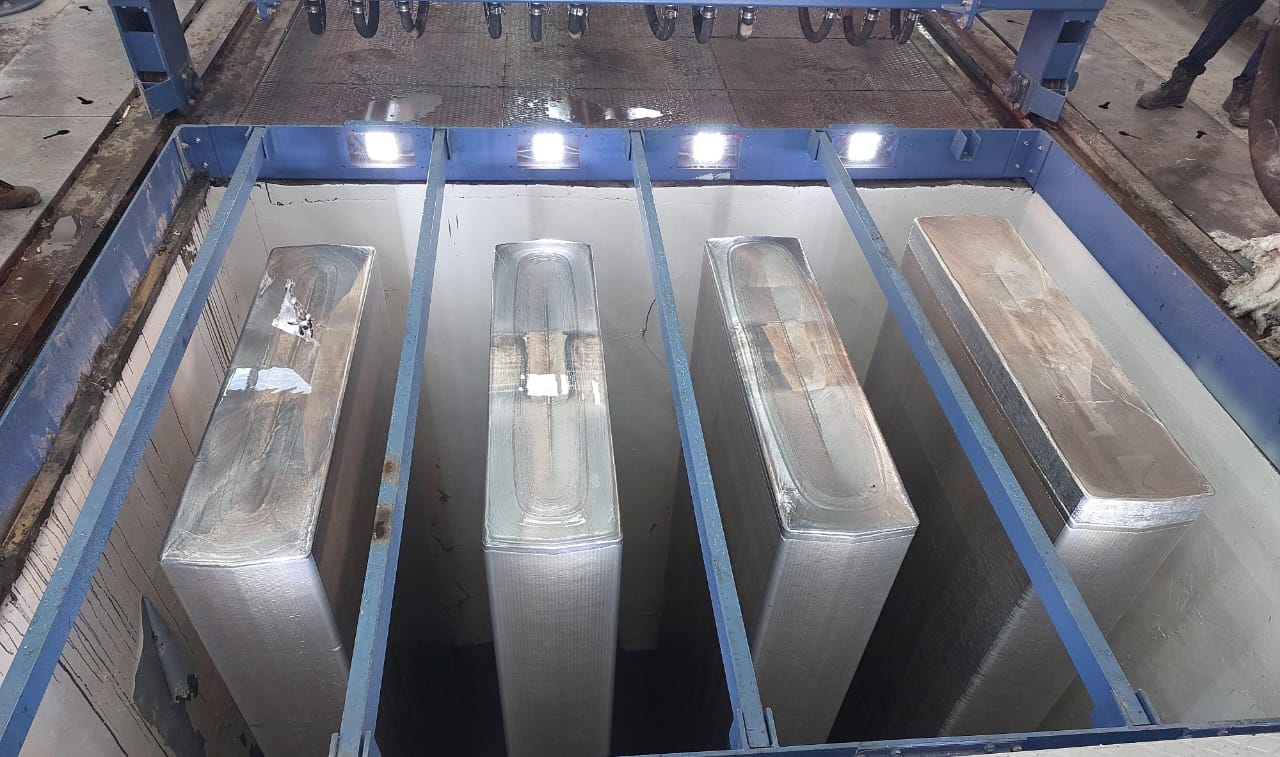
Used in: Roofing · Gutters · Rolling shutters
Material guide
Choosing an alloy series.
Aluminum alloys are grouped into series by their primary alloying element, which largely determines strength, formability and corrosion behavior.
Commercially pure
- Highest corrosion resistance and formability of any series
- High thermal and electrical conductivity, strong reflectivity
- Low mechanical strength; non-heat-treatable, strengthened by cold work (the H tempers)
Best for: signage, reflective and decorative parts, where forming ease, surface quality or corrosion resistance matter more than load-bearing strength.
The construction workhorse
- Roughly 20% stronger than 1xxx, keeping excellent formability and corrosion resistance
- Non-heat-treatable, strengthened by cold work
- 3105 is the substrate in our confirmed ~75% recycled-content example with PUPA coating
Best for: roofing, gutters, rolling-shutter slats and coated coil.
Marine-grade strength
- Higher strength than 1xxx or 3xxx
- Outstanding corrosion resistance, especially saltwater and marine atmospheres
- Forms and welds well; non-heat-treatable, strengthened by cold work
Best for: transportation panels, marine environments and demanding structural uses.
| Series | Main element | Relative strength | Corrosion resistance | Typical coil uses |
|---|---|---|---|---|
| 1xxx | None (≥99% Al) | Low | Excellent | Reflective, decorative, high-formability parts |
| 3xxx | Manganese | Moderate | Very good | Roofing, gutters, shutters, coated coil |
| 5xxx | Magnesium | Higher | Excellent (marine) | Transportation panels, marine, structural |
The right alloy also depends on your forming process and finish. Orbit advises on alloy and temper selection for your application, tell us what you are making in your RFQ.
Processing.
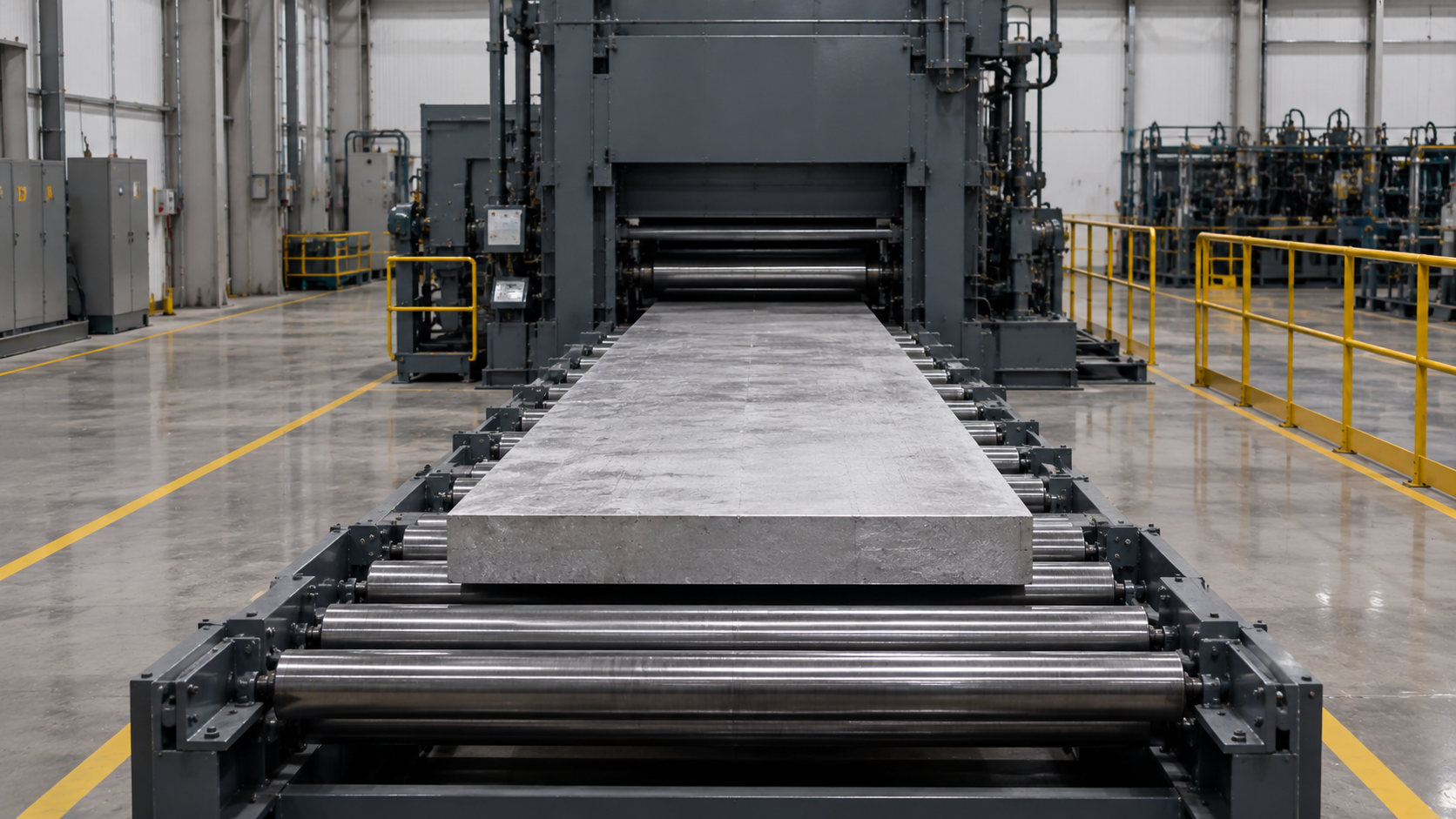
Rolled coil is finished to your line: slitting, cut-to-length, edge trimming, embossing, leveling, and lubrication or protective film.
Slitting & cut-to-lengthMill finish or coated.
The same coil runs through the coating line in PE, HDPE, PVDF, PUPA, and more.
What temper means and why it matters
Temper describes how an alloy has been processed to reach a given strength and hardness. For the non-heat-treatable alloys used in most coil (1xxx, 3xxx, 5xxx), temper is set by annealing and cold work.
| O temper (annealed) | The softest, most formable condition, chosen for deep forming and tight bends. |
|---|---|
| H temper (strain-hardened) | Strengthened by cold rolling. The second digit indicates degree of hardness, from quarter-hard through half-hard, three-quarter-hard to full-hard. Higher hardness means more strength but less formability. |
Choosing temper is a balance: enough hardness for the finished part's stiffness and dent resistance, enough softness to form without cracking. Because the right temper depends on your specific forming operation, Orbit supplies temper to your requirement, available on request and confirmed at quote stage.
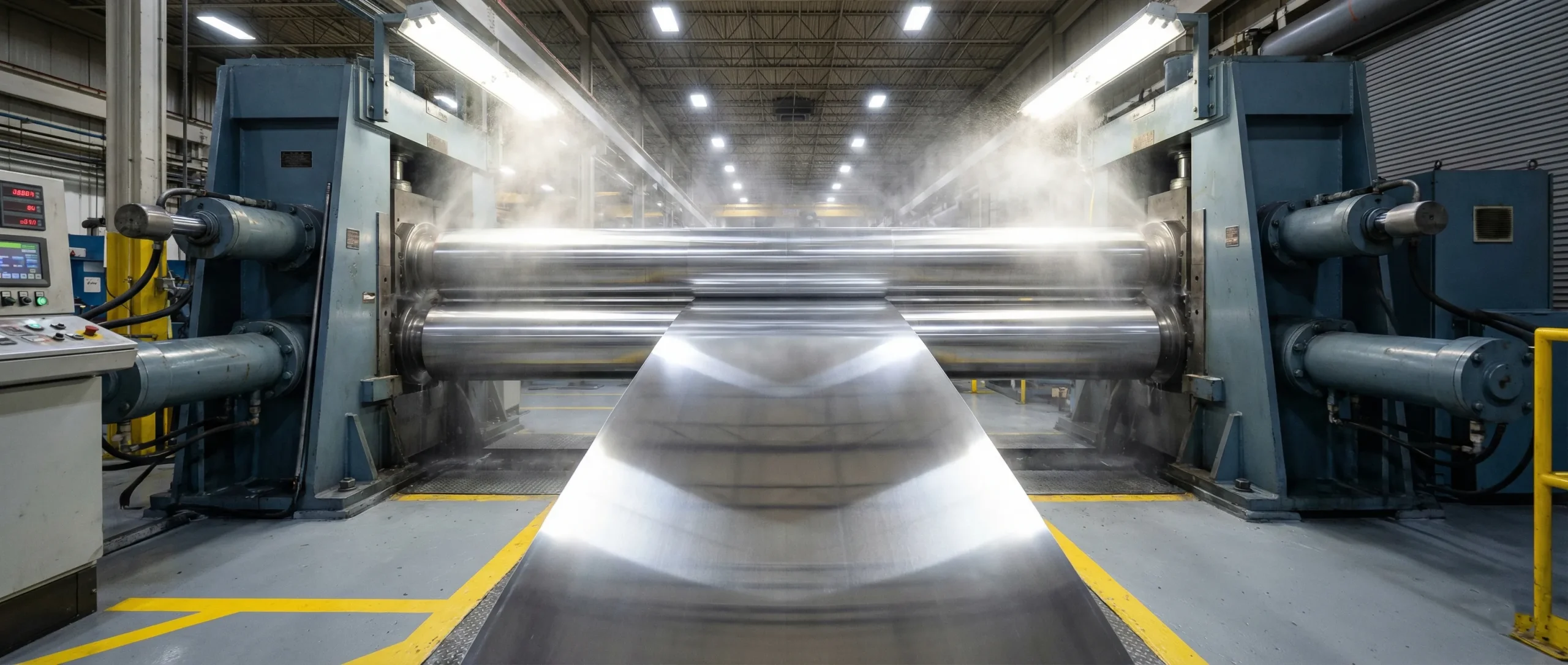
From slab to finished coil
Rolled coil begins as a cast slab, which is hot-rolled to an intermediate gauge and then cold-rolled in successive passes to final thickness. Cold rolling both achieves the target gauge and develops mechanical properties through work hardening; intermediate annealing softens the metal between passes where deeper reductions or specific tempers are needed. Surface finish (mill finish or stucco) and flatness are controlled through the rolling and leveling stages. Casting and rolling run on the same site, see the recycling loop.
Rolled coil questions.
What aluminum alloys does Orbit roll?
Orbit rolls 1xxx, 3xxx, and 5xxx series aluminum alloys. The right series depends on your application's strength, formability, and corrosion requirements.
What thickness and width can Orbit produce?
Orbit rolls from 0.20 to 2.00 mm thick and up to 1650 mm wide, with coils up to 10 tons at maximum width.
What is the minimum order quantity for rolled coil?
The standard order minimum is 6.5 MT, plus or minus 10 percent.
What tempers are available?
Tempers are available on request, share your forming process in your RFQ and we will confirm.
Where does Orbit ship from?
Orbit ships from Aqaba, Jordan, by land to nearby markets and by sea to Europe and North America.
Quality & compliance
Quality & compliance.
Certified production
Production is certified to ISO 9001 (quality), ISO 14001 (environment) and ISO 45001 (occupational health and safety).
Tested to standard
Coil is checked against ASTM or EN references by market, on tests such as salt spray, UV, T-bend, adhesion, gloss retention and color difference (delta E) for coated products.
Documentation with the batch
Material certificates accompany every batch; test reports and ASTM or EN references are available on request. See quality & certifications.
Need mill-finish coil?
Send your alloy, gauge and width, we will quote to spec. Include your application, substrate (aluminum or steel), alloy, gauge, width, coating, color, quantity and destination. We respond to RFQs within one business day.