
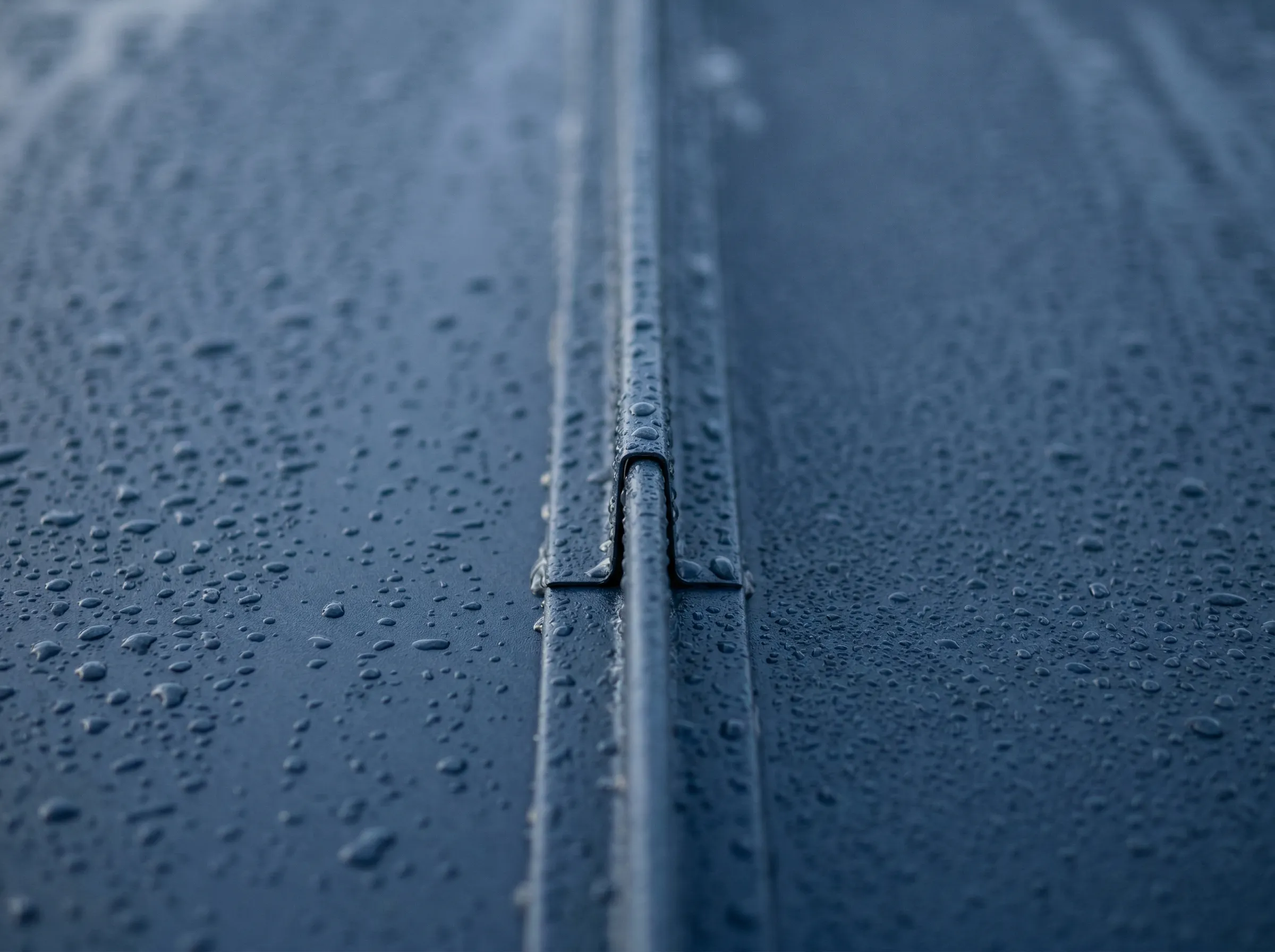
Alloy 3xxx · PVDF / HDPE
Aluminum roof coil in PVDF and HDPE, any RAL color.
Coil for standing seam, corrugated and panel systems in PVDF and HDPE coatings and any RAL color. The same coil feeds fascia, drip edge and flashing trim.
- Alloy 3xxx
- PVDF / HDPE
- Standing seam, corrugated, panel
- RAL or custom color
Application
Coating by exposure.
PVDF is the architectural standard for roofing; HDPE suits general-purpose, PE sheltered or budget roofs.
Thermal-insulating coatings can reduce roof surface temperature. Functional coatings.

Coil for roll-forming and seaming.
We supply coil tuned to your roll-forming or seaming line, in the gauge, width and finish your profile needs, with consistent temper so panels run flat and lock cleanly.
Prepainted aluminum coilCoil specification.
| Coatings | PVDF, HDPE, PE |
|---|---|
| Thickness | 0.20 to 2.00 mm (roofing gauge on request) |
| Width | Up to 1650 mm (coating up to 1350 mm) |
| Coil weight | Up to 10 tonnes |
| Minimum order | 6.5 MT (±10%) |
| Color | RAL or custom match (available) |
| Warranty | 5 to 20 years by application and environment |

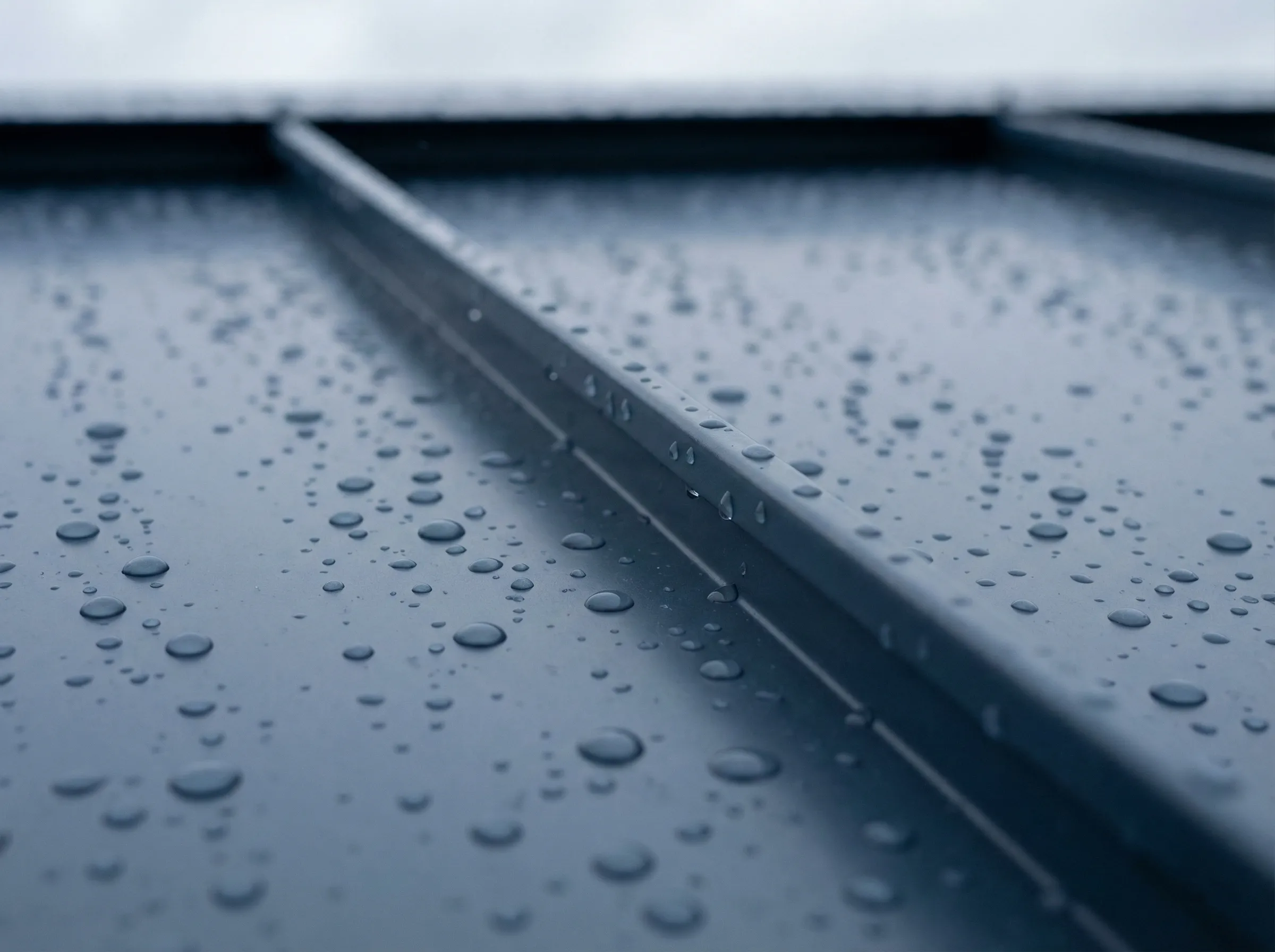
Buyer guidance
Recommended specification.
A starting point for roofing coil. Treat these as guidance, not a fixed datasheet.
| Alloy | 3xxx |
|---|---|
| Coating | PVDF (premium/coastal) or HDPE (general) |
| Profiles | Standing seam, corrugated, panel |
Exact alloy, gauge and coating are confirmed per order, share your spec in an RFQ.
Which alloys suit aluminum roof coil?
3xxx alloys such as 3003 and 3105 suit aluminum roof coil. The manganese series forms well on a roll-former and resists corrosion, which is what standing seam, corrugated and panel profiles need. 5xxx alloys such as 5005 and 5052 are used where more strength or marine exposure drives the decision. 1xxx is usually too soft for roofing profiles. Alloy, temper and gauge are confirmed per order against your profile, and the roofing coil gauge and alloy guide explains how they interact.
For a coastal site, consider a PVDF coating on a 5xxx alloy, because 5xxx has the stronger marine corrosion resistance. 3003 vs 5052 for outdoor coil coating compares the two alloys. Inland roofs on HDPE or PVDF suit 3xxx. Tell us the site distance from the sea if you are unsure, and we recommend the alloy and coating together.
Which coating for an aluminum roof?
The coating is chosen by exposure and by how visible the roof is. Every system below runs in any RAL or custom color, and the roofing coating and finish guide goes into each one.
| System | Roofing use |
|---|---|
| PVDF | Visible and warranty-backed roofs, coastal or harsh exposure. Holds color and gloss through strong UV. |
| HDPE | General exterior roofing, inland or moderate exposure. |
| PE | Sheltered or budget roofs, milder exposure. |
Orbit's warranty runs from 5 to 20 years depending on the application and the environment, and the terms are confirmed per order. The full range of coating systems, finishes and colors is on the prepainted aluminum coil page. If you form or coat the coil yourself, start from mill-finish aluminum coil.
How to specify aluminum roof coil
Four choices define a roofing coil order. Gauge and coil width follow the panel profile and its coverage width. Temper sets the balance between forming depth and stiffness: a softer temper bends into deeper profiles, a harder one gives a stiffer panel, and Orbit confirms temper at quote stage against your forming process. Coating sides matter for handling: coil is coated one-side, or two-side with primer, and protective film is available to guard the surface through forming and transit. Finally, the finish, matte or gloss, solid or metallic, is matched to your RAL number or sample.
Cut edges and field repairs deserve a question before fabrication, because a cut edge exposes bare metal. The post on cut edges and field repairs on coated aluminum lists what to ask. Coil that will be slit to a narrower strip for flashing, fascia or drip edge follows the same specification.
To quote aluminum roof coil, send the profile, alloy and temper if known, gauge, coil width, coating system, color, quantity and destination port.
Why aluminum roofing
Aluminum does not rust, a decisive advantage over uncoated or cut-edge steel on long-life roofs, and its light weight reduces structural load. A PVDF finish holds color and resists chalking for decades, which matters on visible and warranty-backed roofs.
Design and forming
Roofing coil is roll-formed into standing seams and profiles, which bends the coated strip sharply, so the coating has to flex without cracking or losing adhesion; that is what the T-bend and adhesion tests check. Roofs also see constant thermal cycling and water, so corrosion resistance and a durable topcoat are what keep the surface intact over a long service life. Aluminum is also lighter than steel or tile, which reduces the structural load the roof has to carry.
Cool-roof (NIR-reflective) coatings can reduce roof surface temperature.
Quality & compliance
Testing and documentation.
Certified production
Production is certified to ISO 9001 (quality), ISO 14001 (environment) and ISO 45001 (occupational health and safety).
Tests that matter here
Coated coil is checked on a panel of tests including salt spray, UV / accelerated weathering, T-bend flexibility and gloss retention. See quality & certifications for how this is documented.
Documentation with the batch
Material certificates accompany every batch; ASTM and EN references are available on request.
Roofing questions.
What coating is best for aluminum roofing?
PVDF is specified where UV and color retention matter most, such as visible roofing; HDPE is a moderate-cost option for general exterior use.
Does aluminum roofing rust?
No. Aluminum does not rust, which is a key advantage over uncoated steel for roofing.
What roofing profiles can the coil supply?
The coil suits standing seam, corrugated and panel roofing systems.
What thickness is typical for roofing?
Orbit rolls from 0.20 to 2.00 mm; the exact roofing gauge is confirmed per order.
What is the minimum order?
The minimum order is 6.5 MT, plus or minus 10 percent.
What to send with your RFQ.
Include these and we can return a coil specification and quote without back-and-forth.
- Application and substrate (aluminum or steel)
- Alloy and temper, if known
- Gauge and coil width
- Coating system and color (a RAL number or a sample)
- Quantity and destination port
Our technical office reviews every RFQ and replies with a specification and quote. We respond to RFQs within one business day.
Roofing project to quote?
Send the profile, gauge and color, we will recommend the coating. Include your application, substrate (aluminum or steel), alloy, gauge, width, coating, color, quantity and destination. We respond to RFQs within one business day.