
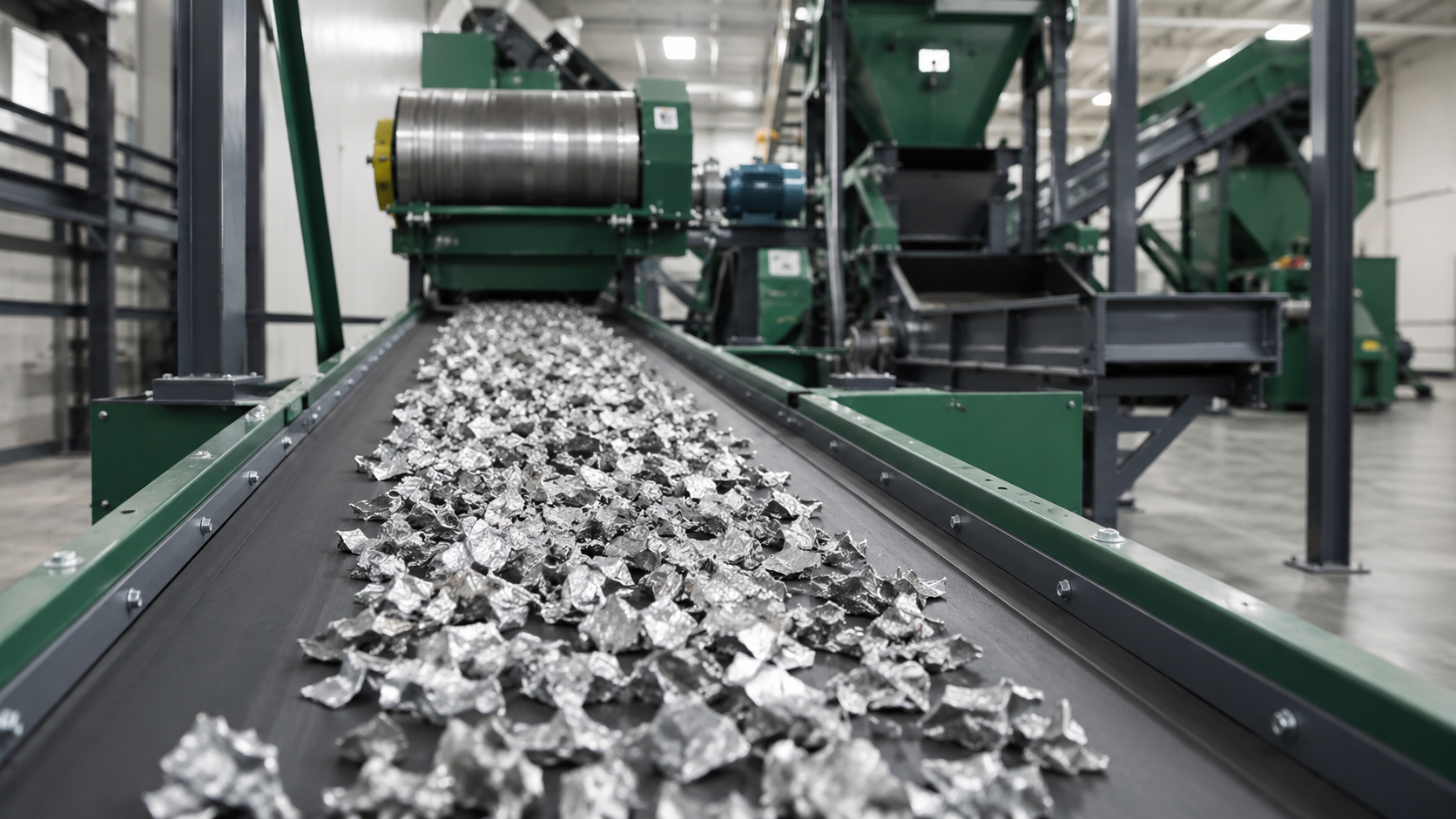
The recycling loop.
Sorted scrap is shredded, cast, rolled, and coated in-house, kept inside Orbit's quality chain.
The loop
Sorted, melted, cast, rolled.
Internal and purchased scrap, shredded and sorted before melting for a consistent furnace charge.
Scrap in
Internal and purchased scrap: used beverage cans, extrusion, coil, painted, old and new scrap.
Shred & sort
Scrap is shredded and sorted to remove contaminants and group material for a consistent melt.
Melt & cast
A cast house with two furnaces remelts the metal and casts it ready for rolling.
Roll & coat
Cast metal is rolled to gauge and, where specified, coated, completing the loop into finished coil.
The loop, stage by stage.
What happens at each stage, and why it matters for the coil you receive.
Scrap intake and sourcing
Orbit takes in internal process scrap from its own rolling and coating lines alongside purchased scrap from local and nearby-region suppliers. Accepted material includes used beverage cans, extrusion offcuts, coil and painted scrap, both old (post-consumer) and new (post-industrial). Why it matters: a broad, well-characterized scrap stream is what makes consistent recycled-content casting possible, and sourcing close to the plant keeps transport short and supply steady.
Sorting and shredding
Incoming scrap is shredded, then separated and sorted to remove contaminants and group material by type. Why it matters: aluminum's final properties depend on its chemistry, so a clean, sorted charge is essential to cast metal that rolls and coats predictably.
Casting (two furnaces)
The sorted charge is remelted in the cast house, which runs two furnaces, and cast into slabs. Dross from the melt is sold externally rather than retained, and Orbit does not offer tolling: the metal feeds Orbit's own production. Why it matters: casting in-house is the step that turns recycled scrap into usable starting stock under Orbit's own control.
Rolling
Slabs are hot-rolled and then cold-rolled in successive passes to the target gauge and temper. Why it matters: rolling the metal Orbit cast itself keeps alloy chemistry consistent from the furnace through to final thickness.
Coating
Where specified, the rolled coil runs through the coil-coating line in the chosen system and finish; otherwise it ships mill-finish. Why it matters: coating on the same site means the recycled substrate and its finish are qualified together, not sourced from separate parties.
Finished coil
The result is finished coil with recycled content traceable to the cast batch, packed and shipped to the customer. Why it matters: that traceability is what lets buyers use the recycled-content figure in their own reporting.
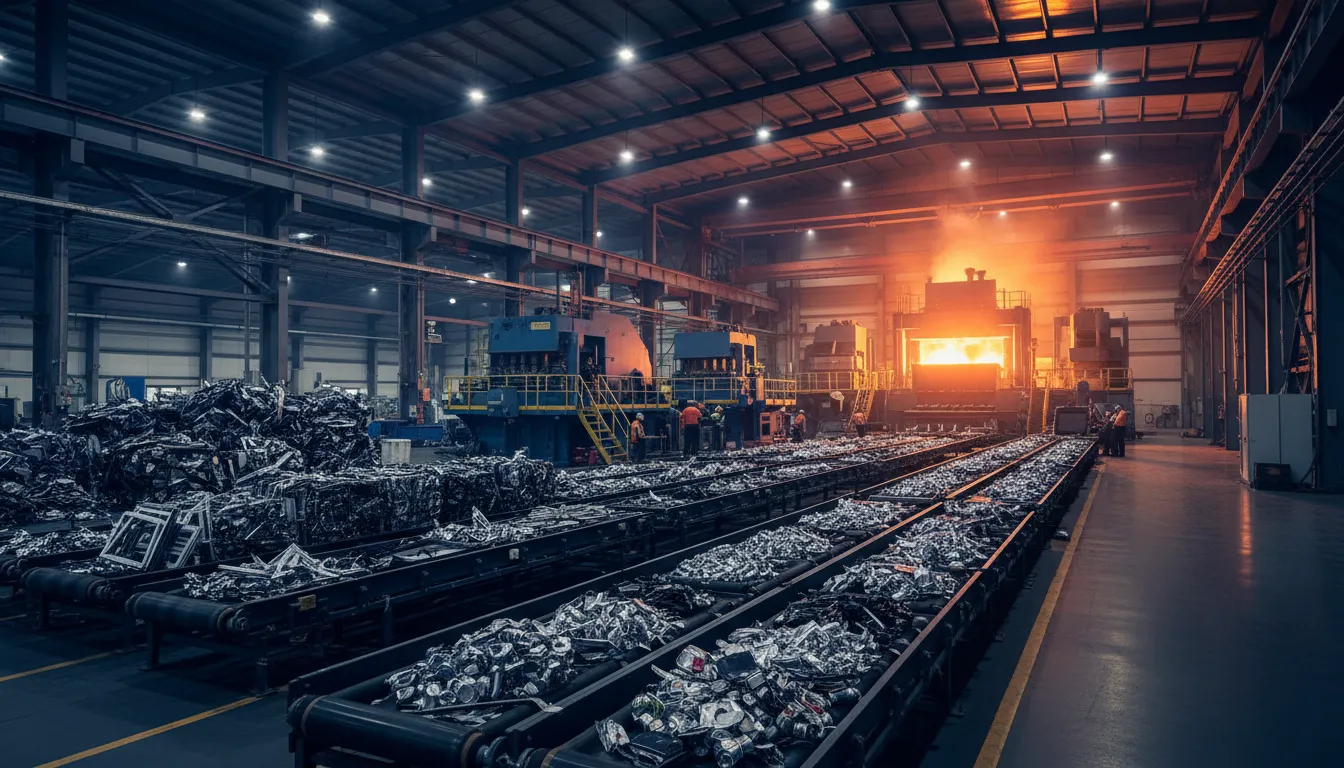
No tolling.
Scrap feeds Orbit's own coil, not a third party, so recycled metal stays inside the same chain that rolls and coats it.
How we control qualityScrap streams
Scrap accepted.
Aluminum scrap turned back into casting stock for new coil.
Every load is shredded and sorted before melting, so the cast metal starts from a known input. Mixed and painted scrap is handled through sorting; exact acceptance for a given load is confirmed with our team. The difference between old and new scrap matters for reporting: post-consumer (old) scrap is metal that has already served a life in a product, while post-industrial (new) scrap is offcuts from manufacturing.

Why integration makes the loop work
Many suppliers buy in remelted metal or send scrap out to be tolled, which breaks the chain of custody between recycling and the finished product. Orbit keeps the whole loop on one site: recycling, casting, rolling and coating run under one ISO 14001 environmental management system. Three things follow from that.
- The recycled content in a coil is traceable to the cast batch it came from.
- Quality is controlled from the furnace to the finished surface, rather than across separate companies.
- Orbit can document the recycled-content figure for a buyer's own reporting.
See how this is controlled in quality and certifications, and what content is achievable in recycled content.
Common questions.
What scrap do you accept?
Internal scrap from our own production and purchased scrap from the market, including used beverage cans, extrusion, coil, painted, old and new scrap. It is shredded and sorted before melting.
Do you offer tolling?
No. We do not toll. The scrap we process feeds our own coil, which keeps recycled metal inside our quality chain rather than returning it to a third party.
How is the melt kept consistent?
Shredding and sorting remove contaminants and group material before it enters the cast house, where two furnaces remelt and cast the metal for rolling.
What happens to the dross from melting?
Dross from the melt is sold externally rather than retained, so the by-product of recycling is passed on for further recovery.
Interested in recycled-content coil?
See what content is achievable, then send your spec. Include your application, substrate (aluminum or steel), alloy, gauge, width, coating, color, quantity and destination. We respond to RFQs within one business day.