
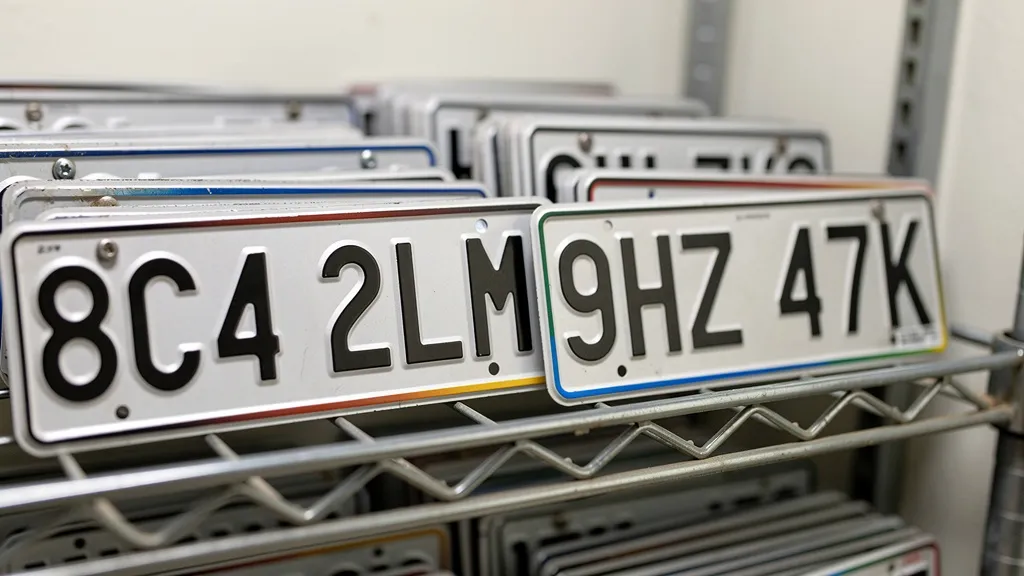
Alloy 1xxx / 3xxx · mill finish or primer
Aluminum license plate blanks begin with consistent coil and sheet.
Orbit supplies the coil and sheet that plate makers turn into aluminum license plate blanks. Consistent-gauge coil with a flat, clean surface for stamping, embossing and finishing.
- Alloy 1xxx / 3xxx
- Mill finish or primer
- Thickness and temper held to the order specification
Application
Consistent gauge, clean emboss.
Flat, even stock intended for stamping and embossing lines.
Related applications: Signage · Truck & trailer panels

Stock for high-volume runs.
We supply to a steady specification, with reflective and finishing requirements coordinated to your standard.
Slitting & cut-to-lengthCoil specification.
| Substrate | Mill-finish aluminum (stock for retroreflective sheeting on request) |
|---|---|
| Thickness | 0.20 to 2.00 mm rolled; up to 1.60 mm coated (plate gauge on request) |
| Width | Up to 1650 mm; slit to blank width or supplied as sheet |
| Coil weight | Up to 10 tonnes |
| Minimum order | 6.5 MT (±10%) |
| Reflective / finishing | Available on request, coordinated to your standard |
Guidance
Recommended specification.
A typical starting point for license-plate blank coil.
| Alloy | 1xxx or 3xxx |
|---|---|
| Finish | mill finish or specified primer |
| Tolerances | thickness and temper held to the order specification |
| Thickness | Thickness is set by your specification and confirmed per order; Orbit rolls 0.20 to 2.00 mm, coated up to 1.60 mm. Gauge numbers convert to mm on the sheet metal gauge chart. |
| Retroreflective sheeting | mill-finish or primed stock for blank makers who apply retroreflective sheeting, on request |
Exact alloy, gauge and coating are confirmed per order, share your spec in an RFQ.
Plate production requirements
License-plate manufacturing needs thickness and temper held to the order specification, a clean surface for embossing and for reflective-sheeting adhesion, and reliable flatness across the full coil width. Surface cleanliness is critical so reflective film bonds correctly.
Where plates are coated, see coating systems; mill-finish stock is also available.
Coil and sheet for plate blank makers
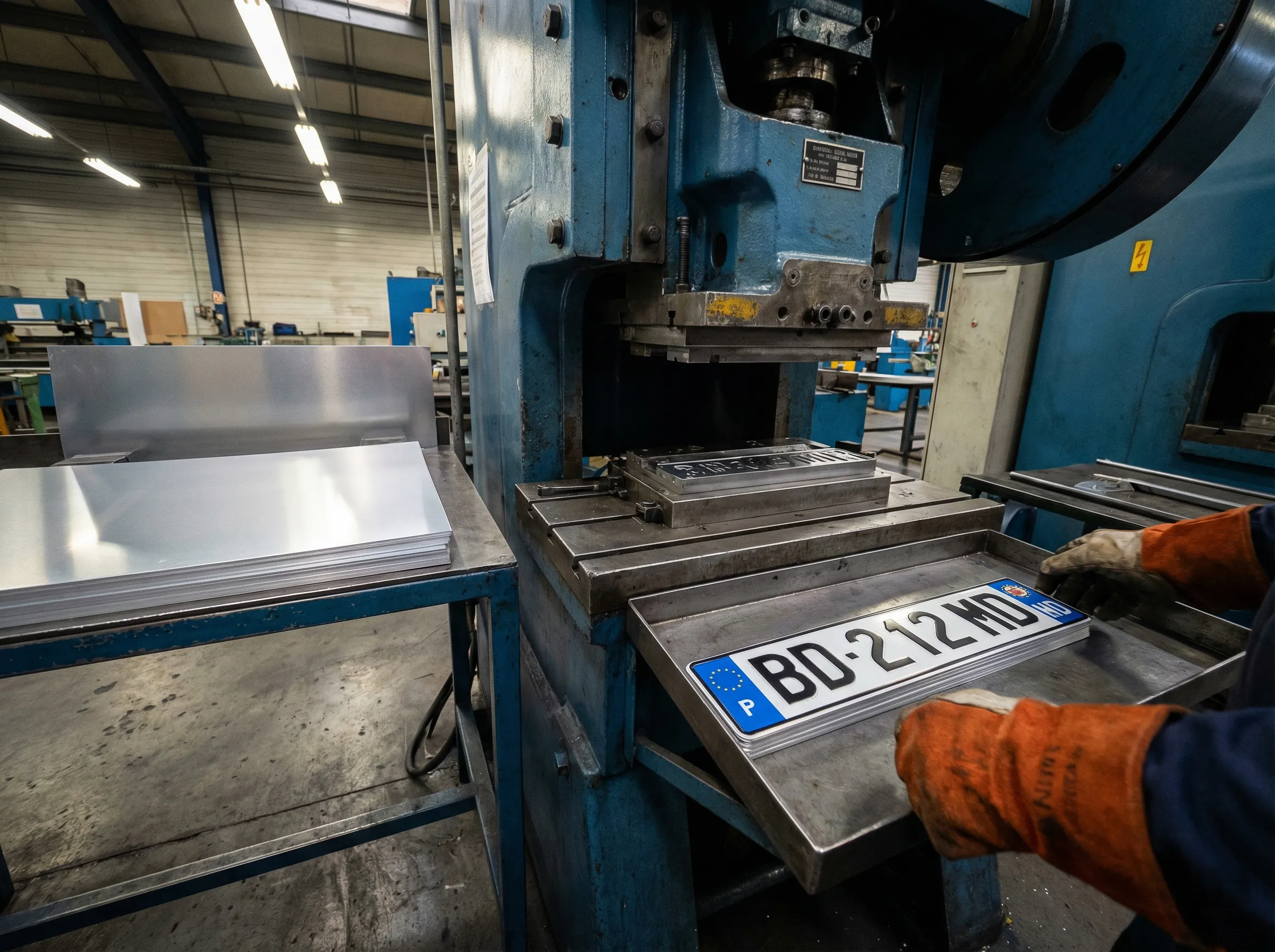
Orbit is the mill at the start of the chain. We cast, roll and, where required, coat the strip, then slit it to blank width or cut it to length as flat sheet. The plate maker cuts the license plate blanks, and the plate is then embossed or flat-printed and faced with retroreflective sheeting. The order of those steps depends on the plate system and the issuing authority's specification, so we supply to the form your line takes: coil, slit coil or sheet.
A plate program runs the same tooling against the same specification over long production runs. Small drift in gauge or temper that would pass unnoticed on a short run becomes a recurring press setup problem over a long program, which is why the stock is held to a steady specification from batch to batch, with a material certificate for every batch.
Which alloy for aluminum license plate blanks?
1xxx or 3xxx is the starting point. 1xxx, the commercially pure series, is the softest and most formable of Orbit's alloys, so it takes deep embossed characters well. 3xxx adds manganese for more strength while still forming well, which helps a finished aluminum license plate resist bending in service. 5xxx is stronger again, but that strength works against deep embossing. Temper matters as much as alloy: a softer temper embosses more easily, a harder one gives a stiffer plate. Alloy and temper are confirmed per order against your embossing depth, and the alloy series guide explains the numbering.
Mill finish, primer or prepainted
Plate stock is supplied mill finish, with a specified primer, or as prepainted aluminum coil in a background color. Prepainted stock means the finish is applied once on a continuous coating line rather than painted plate by plate. The post on specifying prepainted coil for license plates covers what to put in that specification.
A note on reflective sheeting
Retroreflective sheeting is bonded to the blank with an adhesive, so it depends on a clean, consistent surface. Whether a given mill finish, primer or coating is compatible with a given sheeting product is confirmed by the blank maker and the sheeting supplier through their own adhesion testing. Orbit makes no compatibility claim for any sheeting product; we supply the surface to the specification you set and document it with the batch certificate.
Quality & compliance
Testing and documentation.
Certified management systems
Orbit's management systems are certified to ISO 9001 (quality), ISO 14001 (environment) and ISO 45001 (occupational health and safety).
Tests that matter here
Where coil is coated, it can be tested for adhesion, pencil hardness, dry-film thickness and T-bend flexibility; test reports for a given order are available on request. Mill-finish stock is supplied to gauge and temper. See quality & certifications for how this is documented.
Documentation with the batch
Material certificates accompany every batch; ASTM and EN references are available on request.
Plate blank questions.
What aluminum is used for license plates?
License plates use flat aluminum coil with consistent gauge, prepared for stamping and finishing.
Which alloy suits license plate blanks?
1xxx or 3xxx is the typical starting point: 1xxx for the easiest embossing, 3xxx for more strength. Alloy and temper are confirmed per order.
Can you supply stock for retroreflective plates?
Mill-finish or primed stock for blank makers who apply retroreflective sheeting is available on request. Sheeting compatibility is confirmed by the blank maker and the sheeting supplier.
Is the stock compatible with my reflective sheeting?
Compatibility is confirmed by the blank maker and the sheeting supplier through their own testing. Orbit supplies the surface to your specification with a material certificate for the batch.
What volumes can Orbit supply?
The coil suits high-volume plate runs; quantities are confirmed in your RFQ.
What thickness is typical for license plates?
Thickness is set by your specification and confirmed per order; Orbit rolls 0.20 to 2.00 mm, coated up to 1.60 mm.
What is the minimum order?
The minimum order is 6.5 MT, plus or minus 10 percent.
What to send with your RFQ.
Include these and we can return a coil specification and quote without back-and-forth.
- Application and substrate (aluminum or steel)
- Alloy and temper, if known
- Gauge and coil width
- Coating system and color (a RAL number or a sample)
- Quantity and destination port
Our technical office reviews every RFQ and replies with a specification and quote. We respond to RFQs within one business day.
Running a plate program?
Send your gauge and reflective standard, we will confirm what we can supply. Include your application, substrate (aluminum or steel), alloy, gauge, width, coating, color, quantity and destination. We respond to RFQs within one business day.