
Aluminum Coil Gauge and Alloy Selection for Roll-Forming and Roofing.
Most gauge charts online are written for someone cutting a single sheet by hand. Roll-forming a roofing profile from coil is a different problem, and gauge only makes sense there alongside the alloy and temper it is paired with.
Key takeaways
- A generic sheet-metal gauge chart is written for hand-cutting, not for a roll-formed roofing profile, where gauge interacts with alloy, temper and panel geometry together.
- Aluminum is roughly a third the weight of steel for the same volume and is less stiff, so gauge habits carried over from steel tend to run light.
- A standing seam or deeply ribbed profile draws stiffness from its geometry; a shallow, flat panel leans harder on gauge and alloy.
- Roofing profiles are specified in the 3xxx or 5xxx families within Orbit's range, chosen by environment and how much stiffness the geometry contributes.
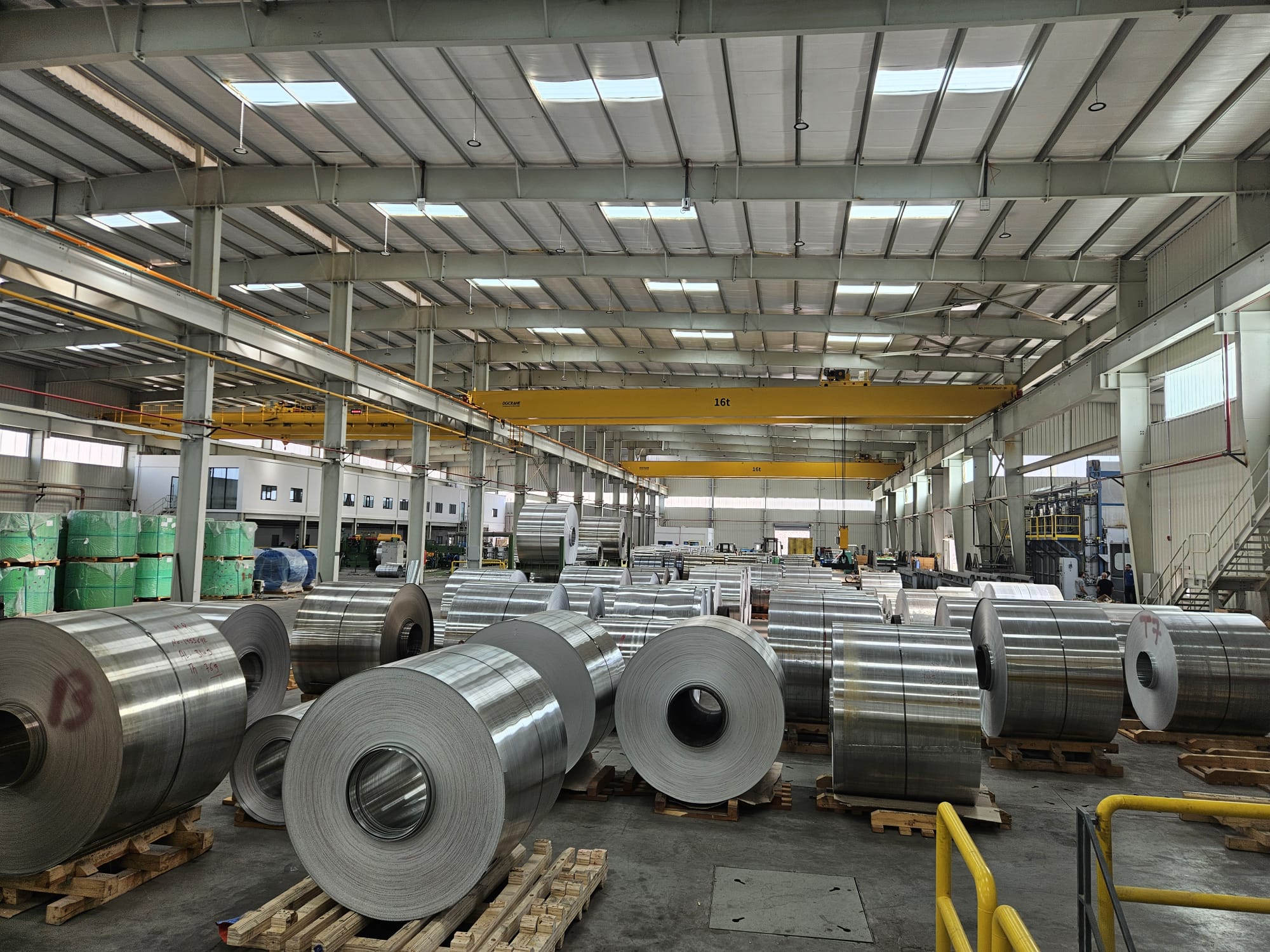
- Orbit rolls roofing coil from 0.20 to 2.00 mm thick and up to 1650 mm wide, in coils up to 10 tonnes.
Why doesn't a standard gauge chart work for roll-formed roofing?
Because it is written for a one-off hand cut, not a continuous forming process. A generic gauge chart gives a thickness in millimeters or inches and not much else, leaving out the variables that determine whether a roll-formed profile forms cleanly and performs once installed.
In roll forming, coil runs continuously through a series of rollers that progressively bend it into the finished profile, and the gauge you choose interacts with the alloy, the temper and the profile geometry the whole way through that process, not just in the finished panel.
What does gauge actually control in a roofing profile?
Stiffness, which determines how far a panel spans between purlins or clips before it deflects, how well it resists denting from hail, foot traffic and handling, and how visible oil canning is across a wide flat pan.
Aluminum is roughly a third the weight of steel for the same volume and is less stiff, so gauge decisions carried over from steel roofing habits tend to run light for aluminum. The panel profile itself does real work too: a standing seam or deeply ribbed profile draws much of its stiffness from its geometry, while a shallow, low-profile panel leans harder on the metal, which raises the importance of gauge as the profile gets flatter.
How do alloy and temper set limits on what gauge can do?
They set the ceiling on strength and stiffness that gauge then works within, so the two decisions have to be made together rather than gauge chosen first and alloy filled in afterward. A harder temper can sometimes let a project run a lighter gauge for the same stiffness target, at the cost of a larger minimum bend radius.
A softer temper forms more easily but needs more thickness to hit the same structural target. See our alloy and temper guide for coil coating for how the O and H-series tempers trade formability against strength.
Does roll-forming tooling constrain gauge and alloy choices?
Yes. Roll-forming tooling is generally set up for a specific gauge range and a specific alloy and temper combination, so changing any one of those three variables partway through a program can mean a tooling adjustment, not just a different coil order.
This is a practical reason to settle gauge, alloy and temper together, and early. A fabricator's existing tooling setup is worth mentioning in an enquiry alongside the profile itself, since it can narrow the practical range before the structural conversation even starts.
Which alloy family fits roofing specifically, 3xxx or 5xxx?
It depends on environment and how much stiffness the profile geometry itself contributes. Within Orbit's range, roofing profiles are specified in the 3xxx or 5xxx families.
A deep standing seam profile that gets most of its rigidity from its shape can often run comfortably in 3003, while a flatter panel in a coastal or high-wind environment may call for the added strength and corrosion resistance of 5052. That comparison, including how to weigh environment and panel geometry against each other, is covered in 3003 vs 5052 for outdoor coil coating applications.

Where does structural load fit into the gauge and alloy decision?
Alongside the fastening design, not before it. Wind uplift and snow load, where relevant, act on the panel and its fastening or clip system together, not on the metal in isolation, so gauge and alloy decisions are properly made alongside fastening.
A panel stiff enough to span comfortably under dead load can still perform poorly at fastener points or seams if the forming there was not sized for the alloy and temper in use. Structural load requirements are project-specific and are properly the domain of the project's structural engineer working from local code requirements, with the coil supplier confirming what a given alloy, temper and gauge combination can deliver in forming and finish.
What is a practical process for a roofing enquiry?
Start with the profile and environment, then let gauge, alloy and temper be proposed together against those two inputs, rather than fixing gauge first from a generic chart.
- Start with the profile: span between supports, panel width, and whether the geometry itself, such as a standing seam, contributes meaningful stiffness.
- State the environment: coastal proximity, industrial atmosphere, wind and snow load where relevant.
- Let gauge and alloy be proposed together against those two inputs.
- Confirm the tightest bend radius the roll-forming tooling will produce, since that constrains which tempers are viable.
Orbit rolls aluminum coil for roofing applications from 0.20 to 2.00 mm thick and up to 1650 mm wide, in coils up to 10 tonnes, with coated coil running up to 1.60 mm thick and up to 1350 mm wide. Testing is to ASTM or EN depending on your market, and the scope of ASTM B209, the standard most commonly referenced for aluminum sheet and plate, covers the sheet and coiled sheet product forms roofing coil is supplied in.
Common questions
What gauge should I specify for a standing seam roof?
It depends on span, environment, and how much stiffness the seam profile itself contributes. Send the profile drawing and site conditions and we will confirm gauge, alloy and temper together rather than from a generic chart.
Can I use the same gauge for aluminum roofing as I would for steel?
Not directly. Aluminum is roughly a third the weight of steel and less stiff, so gauge decisions carried over from steel habits tend to run light for aluminum. Confirm gauge against the aluminum alloy and temper, not a steel equivalent.
Does Orbit roll coil for roll-forming tooling already in use?
Tell us your tooling's gauge range and alloy and temper compatibility alongside the profile, and we will confirm what Orbit can supply against it rather than assuming standard practice matches your setup.
Who confirms structural load requirements for a roofing project?
The project's structural engineer, working from local code requirements. Orbit confirms what a given alloy, temper and gauge combination can deliver in forming and finish, and the two are properly confirmed together.
What is the widest coil Orbit rolls for roofing?
Up to 1650 mm wide for rolled coil, and up to 1350 mm wide for coated coil, in thicknesses from 0.20 to 2.00 mm (coated coil up to 1.60 mm), in coils up to 10 tonnes.
References
- ASTM International — ASTM B209/B209M-21a: standard specification for aluminum and aluminum-alloy sheet and plate.
Specifying a roll-formed roofing profile?
Send your profile, span, environment and coating preference. We will confirm gauge, alloy and temper together and respond within one business day.