
3003 vs 5052 Aluminum: Which Alloy for Outdoor Coil Coating Applications.
Both alloys hold up outdoors. The real question on a cladding job is not whether an alloy will survive the environment, but how much margin you want above the minimum, and what that margin costs in strength, formability and specification simplicity.
Key takeaways
- Both 3003 and 5052 are non-heat-treatable alloys with corrosion resistance suited to exterior use; the difference is degree, not capability.
- 5052, a 5xxx aluminum-magnesium alloy, generally offers more strength and performs better in more demanding environments, including coastal exposure, than 3003.
- 3003 is entirely adequate, and often the simpler, more economical specification, for moderate environments.
- Higher-strength tempers generally need a larger minimum bend radius, so tight forming can favor a softer 3003 temper even where 5052 would otherwise be preferred.
- Orbit's rolling program covers cladding applications across the 1xxx, 3xxx and 5xxx families.
Is one of these alloys actually better outdoors than the other?
Both are outdoor-capable; the difference is degree, not capability. 3003 and 5052 are both non-heat-treatable alloys with corrosion resistance suited to exterior use, which is why both are viable choices for cladding specifications.
5052, as a 5xxx aluminum-magnesium alloy, generally offers more strength and is regarded as performing well in more demanding environments, including coastal and marine-adjacent exposure, than 3003, the more general-purpose 3xxx aluminum-manganese alloy. For cladding work in moderate environments, 3003 is often entirely adequate and the simpler, more economical specification.
What environmental factors should decide the alloy?
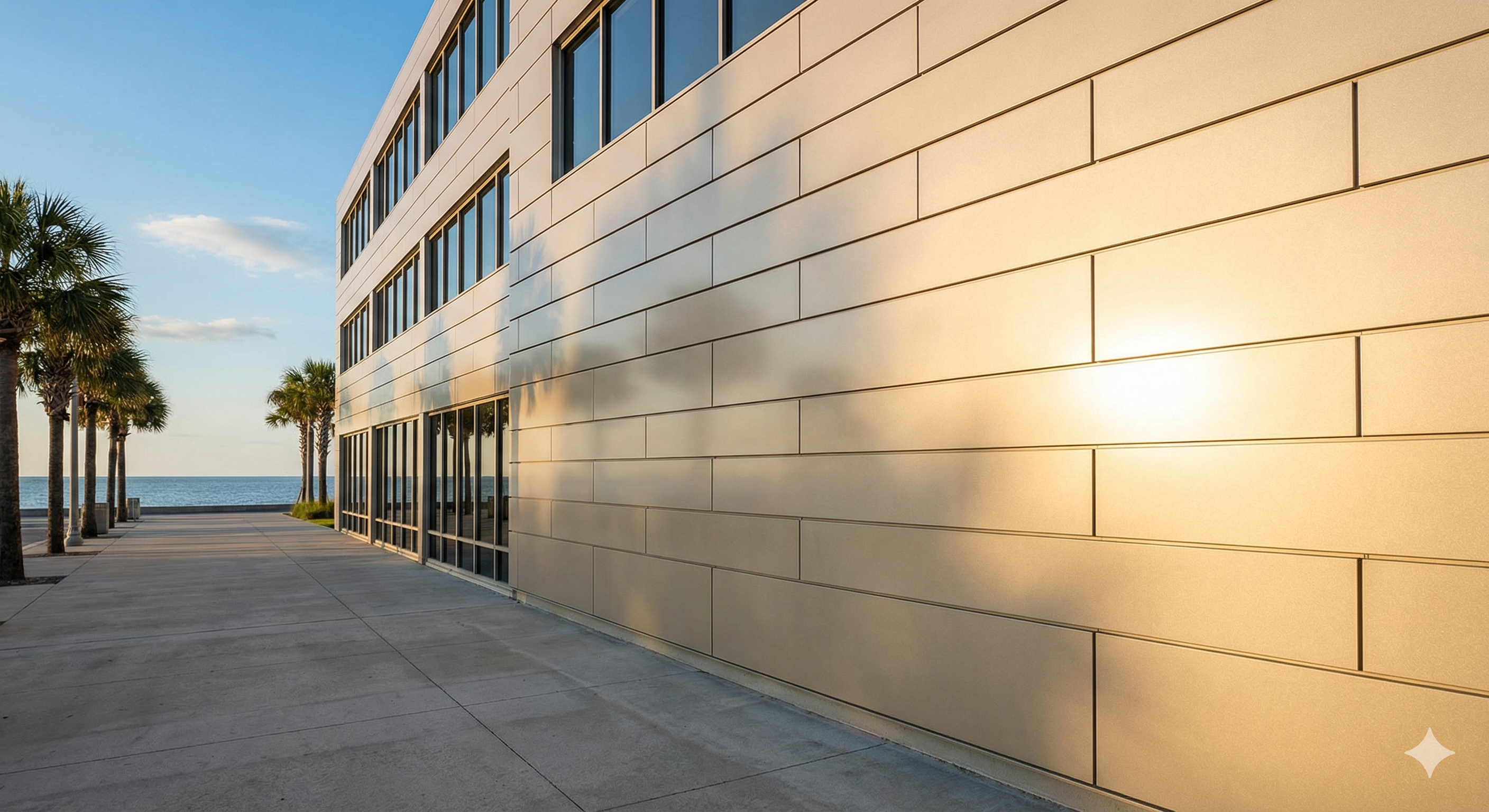
Four, mainly: distance to coastline, industrial atmosphere, UV load, and panel orientation. Distance to coastline is the single biggest factor pushing a specification from 3xxx toward 5xxx, since salt-laden air is the most demanding exposure either alloy faces.
- Distance to coastline. Salt-laden air is the single biggest factor pushing a specification from 3xxx toward 5xxx.
- Industrial atmosphere. Nearby emissions or particulate deposition affect the facade over time, particularly on vertical surfaces that do not self-wash the way a steep roof does in rain.
- UV load. High-insolation regions put more energy into the coating every year, which affects the coating choice more than the substrate alloy, but is worth stating alongside the alloy decision.
- Panel orientation and exposure. A facade panel typically sheds water faster than a low-slope roof, but takes more direct wind-driven exposure and more visible scrutiny at close range.
How does the alloy choice affect forming a cladding profile?
5052, with its comparatively good strength for a non-heat-treatable alloy, can hold a flatter, more dent-resistant panel at a given gauge than 3003, which matters on large, closely-viewed facade panels where oil canning is more visible than on a distant roof.
The tradeoff is that higher-strength tempers generally need a larger minimum bend radius, so a tightly folded profile may actually be easier to achieve in a softer 3003 temper. See aluminum coil gauge and alloy selection for roll forming and roofing for how gauge, alloy and temper interact with forming.
Does color and finish consistency depend on the alloy?
No, mostly a coating and batch-control question. A cladding facade is judged at close range and in direct light in a way a roof usually is not, so consistency across panels, coils and production runs matters more visibly, but both 3003 and 5052 accept the same coating systems and finishes.
It is worth raising alongside the alloy decision on any project where panels from different orders will sit next to each other on the same facade. Confirming coating batch and color reference consistency across the full order quantity up front avoids a mismatch that neither alloy choice can fix after installation.
When is 3003 the right default for cladding?
Where the environment is moderate and panel size and forming are not pushing gauge to its limit. 3003 offers good formability, established corrosion performance, and a simpler specification with fewer variables to confirm.
It is also a widely available alloy across general fabrication, which can simplify sourcing on mixed-material projects.
When should I upgrade to 5052 for cladding?
Where the project sits closer to the coast, in a more aggressive industrial atmosphere, or needs a flatter panel at a lower gauge, 5052 is the appropriate upgrade within Orbit's alloy range.
It is also worth checking whether a specification calling for 6061 on a cladding job is really asking for heat-treated structural strength or would be better served by 5052 in coil form; see 5052 vs 6061 for that comparison.
Does recycled content change the alloy decision?
It can, if your project has that requirement. Orbit's confirmed recycled-content worked example is specific to a 3105 substrate with a PUPA coating, roughly 75%, rather than a general claim across every alloy.
Worth raising early in the specification process if it applies to your project, so alloy, coating and recycled-content requirements can be confirmed together rather than surfacing after the alloy is already locked in.
How do 3003 and 5052 compare at a glance for cladding?
| Characteristic | 3003 | 5052 |
|---|---|---|
| Series | 3xxx, aluminum-manganese | 5xxx, aluminum-magnesium |
| Relative strength | Moderate | Generally higher among non-heat-treatable alloys |
| Corrosion resistance in demanding/marine exposure | Good, suited to moderate environments | Favored for more aggressive, coastal exposure |
| Minimum bend radius at higher strength | Smaller, easier tight forming | Larger at higher-strength tempers |
| Typical role | General cladding, moderate environments | Higher-exposure or higher-strength cladding |
| Orbit rolls this alloy | Yes | Yes |
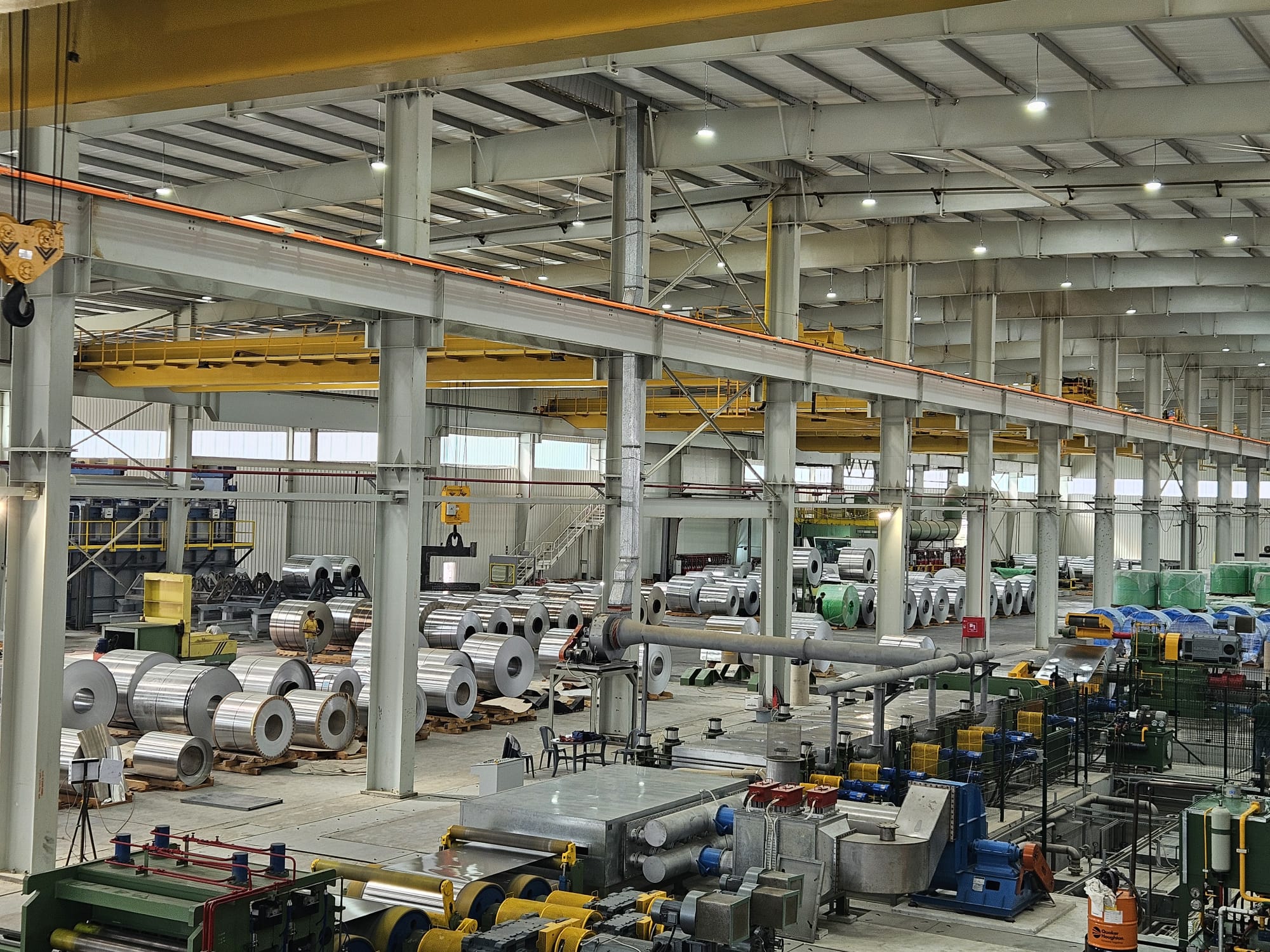
Orbit's rolling program covers cladding applications across the 1xxx, 3xxx and 5xxx families, with alloy and temper confirmed against the specification rather than assumed. General mechanical property data for both alloys is available on request. Under the European standard system, mechanical property standards for aluminum sheet and strip are set out in EN 485-2, while chemical composition limits are set out separately in EN 573-3.
Common questions
Is 5052 always the better choice for cladding?
No. It is the better choice for demanding environments or where a flatter panel at lower gauge is needed. For moderate environments, 3003 is often adequate and simpler to specify.
How close to the coast does a project need to be before 5052 is worth it?
There is no fixed distance; it depends on local atmosphere, wind exposure and industrial activity as well as distance to coastline. Describe the site conditions in your enquiry and we will confirm which alloy fits.
Does Orbit offer recycled-content coil for cladding?
Orbit's confirmed recycled-content worked example uses a 3105 substrate with a PUPA coating, at roughly 75%. If recycled content matters for your cladding project, tell us the alloy and we will confirm what is achievable.
What gauge should I specify for cladding panels?
It depends on panel size, forming and how visible oil canning would be at close range. Orbit rolls coil from 0.20 to 2.00 mm thick and up to 1650 mm wide, and we confirm gauge against your specification.
Can 3003 and 5052 use the same coating system?
Yes. Both accept the same coating chemistries and finishes across Orbit's program. The coating decision is driven by exposure and finish requirements, not by which of these two alloys is underneath.
References
- BSI — EN 485-2: mechanical property standards for aluminum sheet, strip and plate.
- EN 573-3: chemical composition limits for wrought aluminum and aluminum alloys (referenced by EN 485-2 for composition; not separately linked here, no single free public listing identified).
Specifying a cladding coil?
Send your panel profile, environment, gauge, coating and destination. We will confirm the right alloy and respond within one business day.