
5052 Aluminum Coil for Coating: Properties, Thickness, and Finish Options.
5052 offers a useful middle ground of strength, formability and corrosion resistance that suits a wide range of coil coating programs.
Key takeaways
- 5052 is a non-heat-treatable 5xxx aluminum-magnesium alloy valued for good formability and corrosion resistance, including in humid and coastal conditions.
- Orbit rolls 5052 from 0.20 to 2.00 mm thick and up to 1650 mm wide, in coils up to 10 tonnes; coated coil runs up to 1.60 mm thick and up to 1350 mm wide.
- Temper ranges from annealed O for the most demanding forming to H-series tempers for more strength at a larger minimum bend radius.
- 5052 runs across Orbit's full coating program and finish range, in RAL or custom colors.
- Warranties run 5 to 20 years depending on application and environment, confirmed against the specification.
What makes 5052 a common coil choice?
5052 belongs to the 5xxx, aluminum-magnesium series, registered under the standard four-digit wrought aluminum designation system, so "5052" means the same chemistry regardless of which mill supplies it. It is non-heat-treatable, so its strength is set by rolling and temper rather than a later heat treatment step.
Within the 5xxx family it is valued for a combination of moderate-to-good strength, good formability, and the corrosion resistance generally associated with aluminum-magnesium chemistry, including in humid and coastal conditions. It also welds well and takes coating and finishing treatments consistently, which is why it shows up across marine fittings, appliance panels, general fabrication and structural cladding work. The general characteristics here reflect published alloy behavior, not a claim specific to Orbit's material.
What thickness and width is 5052 coil available in?
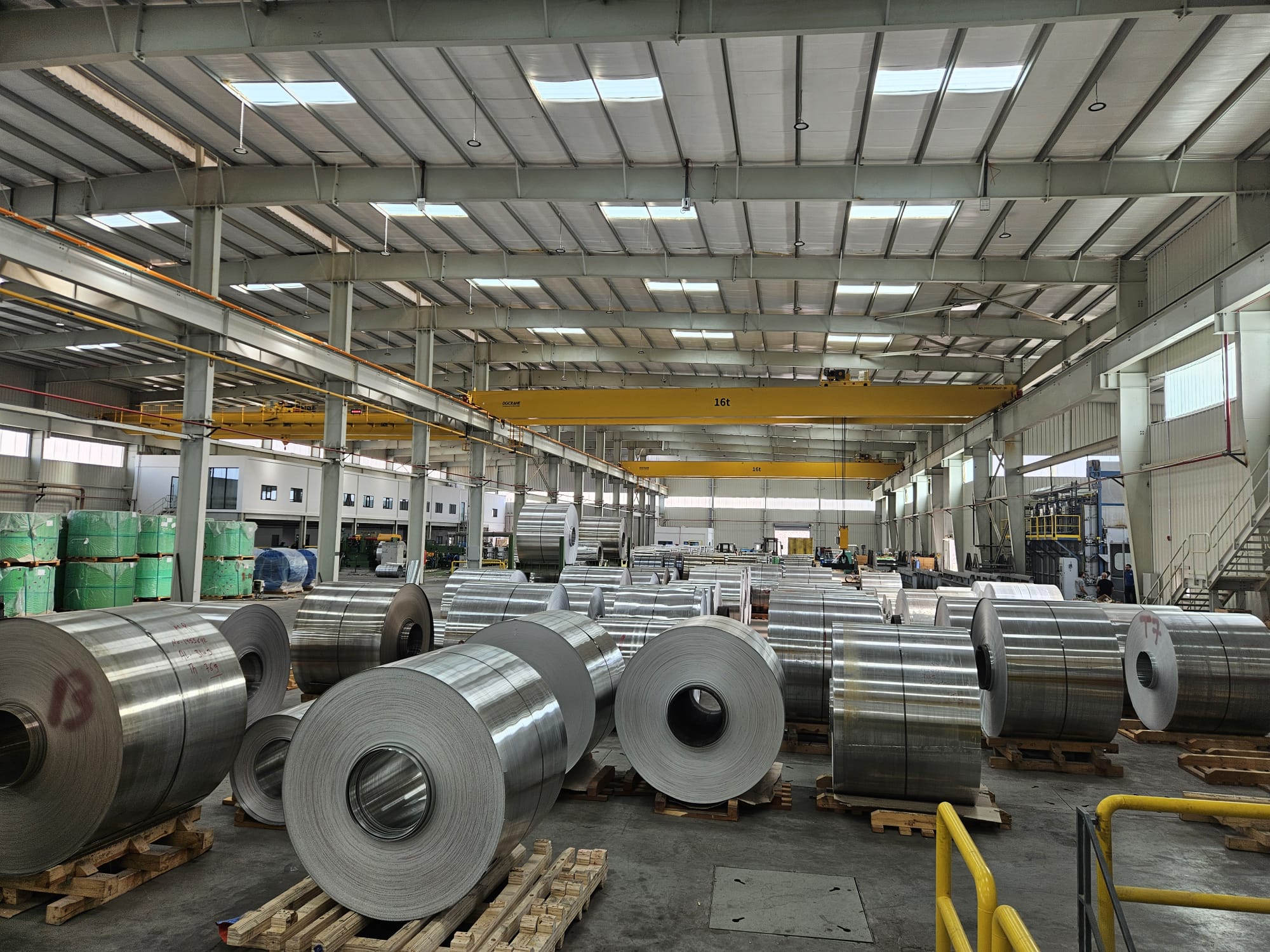
Orbit rolls aluminum coil, including 5052, from 0.20 to 2.00 mm thick and up to 1650 mm wide, in coils up to 10 tonnes. Coated coil runs up to 1.60 mm thick and up to 1350 mm wide.
Where a given application should sit inside that range depends on the forming operation, the span or load the panel needs to handle, and the environment it will serve, so we confirm gauge against the specification rather than defaulting to one thickness. As a general point of sheet metal behavior, thinner gauge relies more on the alloy's inherent stiffness to resist denting and oil canning, which is one reason 5052, with its comparatively good strength for a non-heat-treatable alloy, is often preferred over softer alloys when gauge needs to stay low.
What temper options does 5052 come in?
A range from annealed O temper for the most demanding forming operations, through H-series strain-hardened tempers for applications that need more strength and can tolerate a larger minimum bend radius. The right temper depends on how tightly the coil needs to form downstream and how much strength the finished part needs to carry.
It is worth stating the forming operation in an enquiry rather than naming a temper by habit. Specific mechanical property figures for a given temper and gauge are available on request against your specification.
How good is 5052's corrosion resistance, in practical terms?
Well documented, including in marine and coastal environments, which is one of the reasons 5xxx alloys are favored over 3xxx or 1xxx where the environment is more demanding. In practice this means 5052 tends to be forgiving of exposure that would push a lower alloy toward a more conservative coating specification: coastal air, occasional standing moisture, and general outdoor weathering.
This does not remove the need for the right coating system for a given environment, since coating and substrate corrosion resistance address different parts of the durability picture, but it does give a specification more margin if conditions turn out more aggressive than initially assumed.
What coating and finish options run on 5052?
The full range: PE, HDPE, PVDF, PU, PUPA, Epoxy, Acrylic and Epoxy-PE, in solid, metallic, woodgrain, brushed, matte, gloss and textured finishes, plus anti-graffiti and anti-bacterial variants, in RAL or custom colors.
Which system suits a given project usually comes down to exposure, coastal or industrial atmosphere, UV load, and how long the color and gloss need to hold, rather than the alloy itself, since 5052 is compatible with the full range.
When should I choose 5052 over Orbit's other alloys?
When a project needs more strength or better aggressive-environment corrosion resistance than the 3xxx family offers. Some specifications reach for 6061 instead, out of familiarity with structural work, when what the application actually needs is a coil-friendly alloy like 5052.
See 5052 vs 6061 for how that comparison plays out and why coil coating programs generally favor the former.
What else should I confirm before placing an order?
A few practical details beyond alloy, temper, gauge and coating: coil weight relative to your uncoiling and forming equipment, core size and inside diameter compatibility, and edge condition, since a slit edge that has not been deburred properly can telegraph into the finished panel during forming.
None of these are alloy-specific to 5052, but they are worth confirming alongside the alloy decision rather than assuming standard practice matches your equipment, particularly on a first order with a new supplier. Minimum order quantity is 6.5 MT. Coil ships from Aqaba, with transit to Europe of 5 to 13 days port to port and to the USA of around 25 days. Testing is to ASTM or EN depending on your market, and the registered chemical composition and general characteristics of 5052 are documented in the Aluminum Association's Teal Sheets alloy registration records.
Common questions
What gauge should I specify for 5052 roofing or cladding coil?
It depends on span, load and the forming operation the profile requires. Orbit rolls 5052 from 0.20 to 2.00 mm thick and up to 1650 mm wide, and we confirm gauge against your specification rather than a generic recommendation.
Does 5052 need a different coating system than other alloys?
No. 5052 runs across Orbit's full coating program, PE, HDPE, PVDF, PU, PUPA, Epoxy, Acrylic and Epoxy-PE. The coating decision is driven by exposure and finish requirements rather than by the alloy underneath.
What warranty applies to 5052 coated coil?
Orbit's warranties run 5 to 20 years depending on application and environment. The figure applicable to a given project is confirmed against the specification, not quoted in advance of it.
Is 5052 available with recycled content?
Orbit's confirmed recycled-content worked example uses a 3105 substrate with a PUPA coating, not 5052. If recycled content matters for your order, tell us the alloy you need and we will confirm what is achievable.
What is the minimum order quantity for 5052 coil?
6.5 MT. Coil ships from Aqaba, with transit to Europe of 5 to 13 days port to port and to the USA of around 25 days.
References
- Aluminum Association — Teal Sheets: registered chemical composition and general characteristics of 5052.
Specifying 5052 coil?
Send your application, gauge, width, coating, color, quantity and destination. We respond to RFQs within one business day.