
How Aluminum Coil Recycling Works, From Scrap to Coated Coil.
Aluminum recycling gets mentioned often and explained rarely. Here is the general path scrap actually takes to become new coil, and why the steps in that path matter to the recycled-content figure on your order.
Key takeaways
- Aluminum can be remelted repeatedly without its basic metallurgical properties degrading, which is why recycled-content coil is a repeatable option, not a one-off claim.
- The general path is scrap intake, sorting by alloy family, shredding, melting and casting, rolling, and coating.
- Alloy sorting matters because the target chemistry constrains how much recycled input a cast can take.
- Orbit runs recycling, casting, rolling and coil coating on one integrated site in Aqaba, so material stays inside one quality system end to end.
- Industry-wide, recycling aluminum uses roughly 95% less energy than primary production, per the International Aluminium Institute.
Why does aluminum recycle differently from most materials?
Because it can be remelted repeatedly without its basic metallurgical properties degrading. That is a well established characteristic of the metal, which is part of why aluminum scrap recycling works reliably at scale.
Unlike some materials that lose quality with each recycling pass, aluminum scrap that is properly sorted and processed can go back into new products indefinitely. That is the underlying reason recycled-content coil is a realistic, repeatable option rather than a one-off claim.
What is the general path from scrap to finished coil?
Six broadly consistent stages, even though the specific equipment and layout differ by producer: scrap intake and sorting, shredding, melting and casting, rolling, and coating for coil that will be coil coated.
- Scrap intake and sourcing. Aluminum scrap arrives from multiple sources, generally split between post-consumer material, such as used products at the end of their life, and pre-consumer material, such as manufacturing offcuts that never reached an end user.
- Sorting. Scrap is sorted to remove contaminants and, importantly, to separate material by alloy family where possible, since the chemistry of the melt needs to land within the target alloy's registered composition limits.
- Shredding and size reduction. Sorted scrap is reduced in size to prepare it for efficient melting.
- Melting and casting. Scrap is melted, alloyed to the target chemistry with the addition of primary metal as needed, and cast into ingot or slab, ready for rolling.
- Rolling. Cast material is hot and cold rolled down to the gauge and temper the order calls for.
- Coating. Coil that is going to be coil coated moves through pretreatment, paint application and a bake cycle to reach the finished, painted coil.
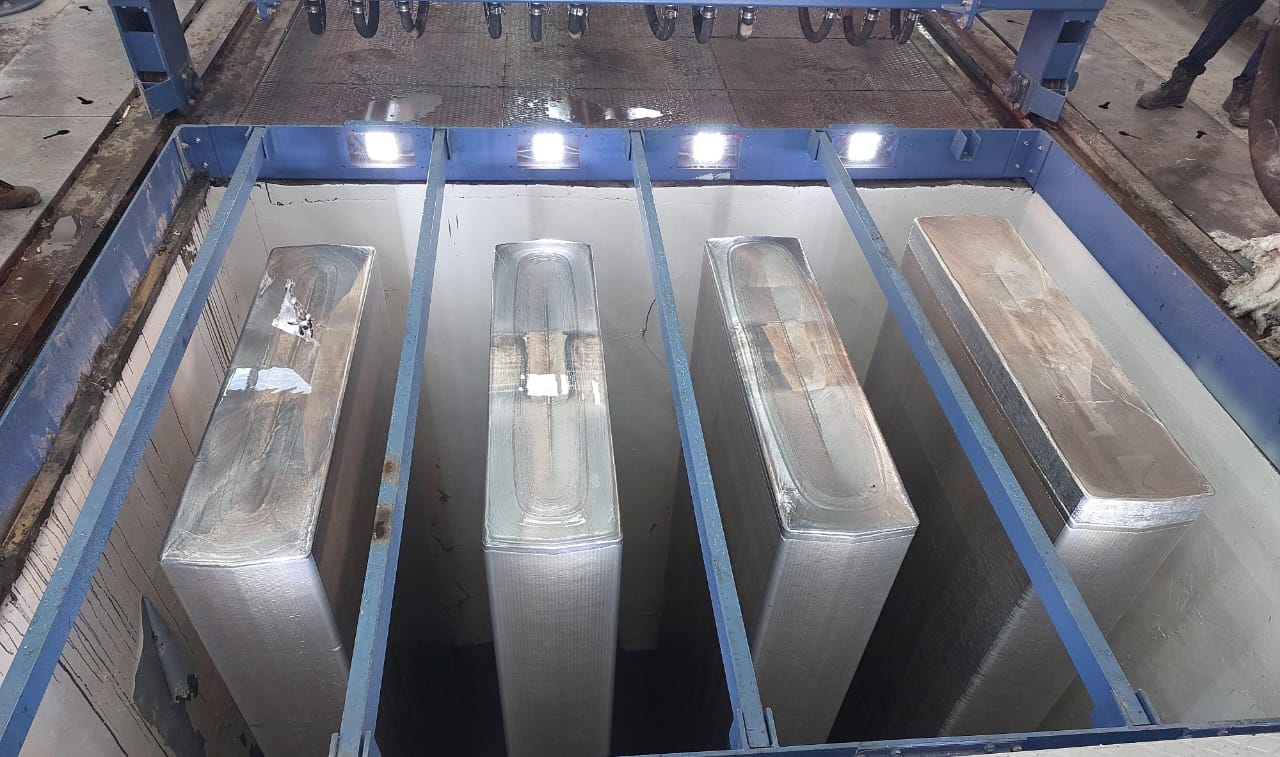
Orbit runs recycling, casting, rolling and coil coating on one integrated site in Aqaba, Jordan, so scrap entering the site can be traced through to finished coil within a single quality system, without crossing between separate companies at each stage.
Why does sorting scrap by alloy matter to my recycled-content figure?
Because the alloy chemistry a cast needs to hit constrains how much recycled input that cast can take while still meeting its registered composition limits. Good sorting is part of what makes a higher recycled-content figure achievable for a given alloy in the first place.
This is the same point covered in more detail in what recycled-content aluminum coil actually means: a recycled-content percentage depends on the alloy and on what scrap is actually available and suitable for that specific cast, not on aluminum as a general category. 3105, the substrate in Orbit's confirmed recycled-content worked example, is discussed alongside its close relative 3003 in 3105 vs 3003, mechanical properties and coil coating applications.
Does most of a cast come from recycled scrap, or from primary metal?
Usually a blend of both. A cast's chemistry has to land within its registered composition limits, and available scrap does not always supply every element in exactly the right proportion, so casts commonly include some primary aluminum alongside recycled scrap.
Primary metal is added to true up the chemistry as needed. This is the mechanism behind the earlier point: recycled content is a proportion set by what the chemistry and the available scrap allow, not a simple choice of recycled-or-not at the coil level.
What does site integration actually change?
It keeps material for a given order inside the same tracking and quality controls the whole way through, which is what makes a batch-level recycled-content figure something Orbit can confirm and document, rather than an estimate based on industry averages.
It is also why recycled-content coil goes through the same quality controls as any other coil Orbit produces: the chemistry has already been trued up to the target alloy specification before rolling starts, so the coil reaching the coating line carries no separate "recycled" or "primary" record beyond the chemistry itself.
How much energy does recycling actually save?
Substantially less than primary production, because recycling skips the electrolytic smelting step that primary aluminum requires. The International Aluminium Institute puts the energy saving from recycling versus primary production at roughly 95%, an industry-wide figure rather than a claim specific to any one producer's process.
See the International Aluminium Institute's recycling factsheet for the full industry data behind that figure.
How does this process turn into a figure I can use?
Through the same site-specific loop described here, applied to your actual order. The site-specific version of this loop, from scrap intake through to finished coil at Orbit's Aqaba site, is laid out on the recycling loop page, where the general process becomes a batch-level figure tied to your cast.
Common questions
Does Orbit recycle scrap on the same site where it rolls and coats coil?
Yes. Orbit runs recycling, casting, rolling and coil coating on one integrated site in Aqaba, Jordan, so material stays inside a single quality system from scrap intake through to finished coil.
Is recycled-content coil lower quality than primary coil?
No. Chemistry is trued up to the target alloy specification before rolling starts, and recycled-content coil goes through the same testing and inspection controls as the rest of Orbit's production.
What is the difference between pre-consumer and post-consumer scrap?
Post-consumer scrap is metal recovered after a product's working life, such as used beverage cans. Pre-consumer scrap is manufacturing offcuts that never reached an end user. Both reduce demand for primary aluminum.
Can any alloy be made with 100% recycled content?
No. Achievable recycled content depends on the alloy's chemistry tolerance and the scrap available for a given cast, which is why Orbit confirms a figure per alloy and order rather than promising one blanket percentage.
How much less energy does recycled aluminum use than primary aluminum?
Roughly 95% less, industry-wide, according to the International Aluminium Institute, because recycling skips the electrolytic smelting step primary production requires.
References
- International Aluminium Institute — Aluminium Recycling Fact Sheet: industry-wide energy-saving figures for recycled vs. primary aluminum.
Want a recycled-content figure documented for your order?
Send the alloy, coating and application, we will confirm the achievable figure and trace it to the cast batch. We respond to RFQs within one business day.